
For more than a century, Ford has been synonymous with invention and innovation. From the moving assembly line to the 40-hour workweek, the company has shaped how we build, how we move, and how we live. Now, its boldest move in a generation may not be about cars at all - it’s about how we work.
Ford’s new global headquarters marks a noteworthy departure from the formal, buttoned-up corporate offices of the past. Originally constructed in 1956, Ford's legacy HQ known commonly as "The Glass House", was groundbreaking for its era. At the time, it was one of the nation’s largest office buildings occupied by a single company. The campus won an "Office of the Year" Award from Administrative Management Magazine in 1956 and in 1967 an "Award of Excellence" from the American Institute of Steel Construction. Spread across 12 floors and 950k+ square feet, the facility could accommodate 2,000+ employees. Despite its storied history, Ford is turning the page on the iconic mid-century modern office complex. Gone are the closed-off offices, endless rows of cubicles, and fluorescent-lit expanses of marble and mahogany. In their place: light-filled spaces, flexible "neighborhoods", team zones, and amenities designed for how people actually get work done today.
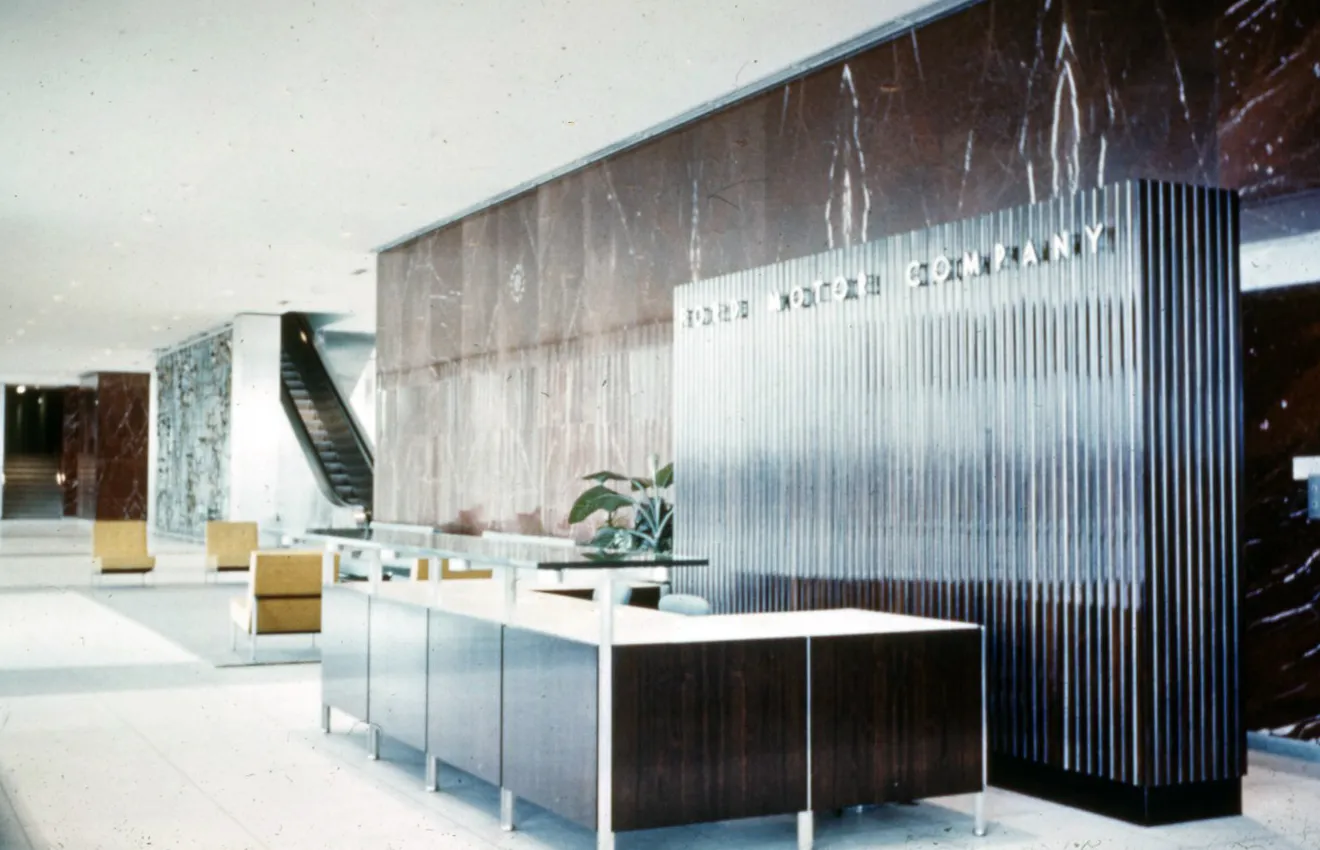
Ford Motor Company Headquarters (Dearborn, MI) | Image via Ford
"If you think about the workplace today, it's largely focused around functions. You have finance in a certain area and body engineering in another area, marketing in another area. This [new design] brings people together around the product, around the final product."
-David Dubensky, chairman and CEO of Ford Land (the automaker's real estate arm)
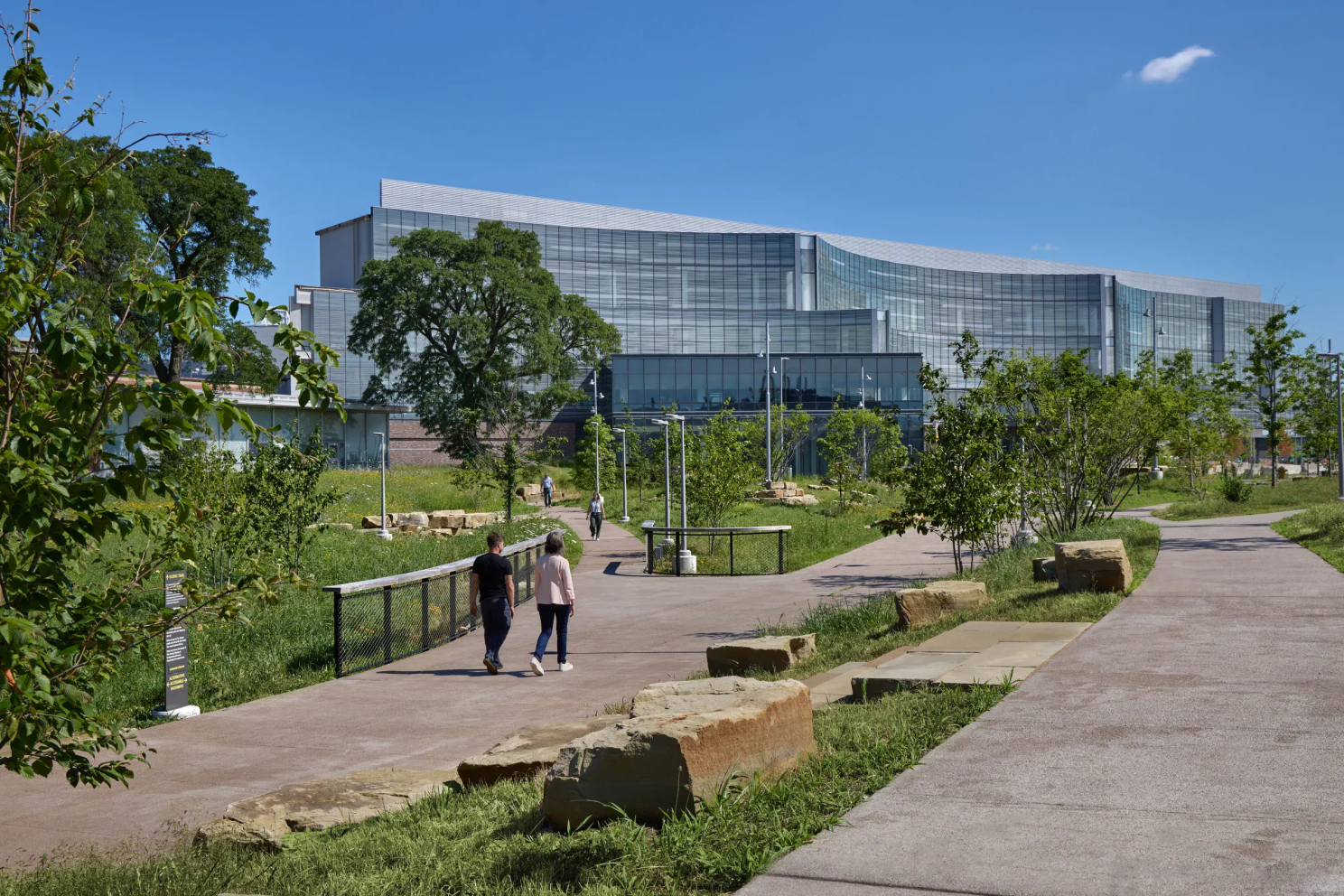
The newly constructed Ford Dearborn campus (Dearborn, MI) | Image via Ford
Out With Tradition, In With Human-Centered Design
This isn’t just a facelift, it’s a fundamental rethink. Instead of planning around hierarchy and control, the building is shaped for adaptability, creativity, and connection. Designed by renowned architecture firm Snohetta and stretching over 2.2 million square feet, it's not a headquarters that tells employees how to work; it’s one that flexes to how people want to work. This is achieved through deliberate focus on a few key design areas:
Collaboration at the heart of the design / Any Ford employee can access collaboration space at the new building. The site is designed to bring cross-functional teams together through three main types of spaces: Workplace, Amenities, and Unique Programming (Design Studios, Showroom, Fabrication Shops, and Garages) to support different working styles. The 'Design Showroom' enables Ford to conduct a full product review in one unified space for the first time, ever.
Walkability and connection to the outdoors / The reimagined campus puts 14,000 employees within a 15-minute walk, enabling collaboration in practice and proximity. The building is equipped with more than 100,000 square feet of interior courtyard space - accessible by all employees throughout the workday. Outside, 12+ acres of greenspace create a walkable environment between facilities on the Dearborn Campus, while more than doubling the existing tree canopy.
Flexible work arrangements / In the reimagined campus, space belongs to people, not departments. Every corner of the building is open for use, enabling flexibility and fueling collaboration across teams on Ford’s Dearborn campus.
Wellness and gathering are front and center / Peppered throughout the campus are large event spaces for hundreds of employees with state-of-the-art technology to accommodate needs in-house. Additionally, a 160K square foot food hall is accessible to all Ford employees alongside wellness rooms, auxiliary kitchenettes, and mothers’ rooms.
Deep sustainability goals / The design of the new World Headquarters is largely informed by WELL building standards and is designed as a Net-Zero Energy Building with a net-zero carbon footprint.
Fittingly Ford designers even collaborated on a clay scale model of the future facility using the same talent and technology the building will eventually hold.
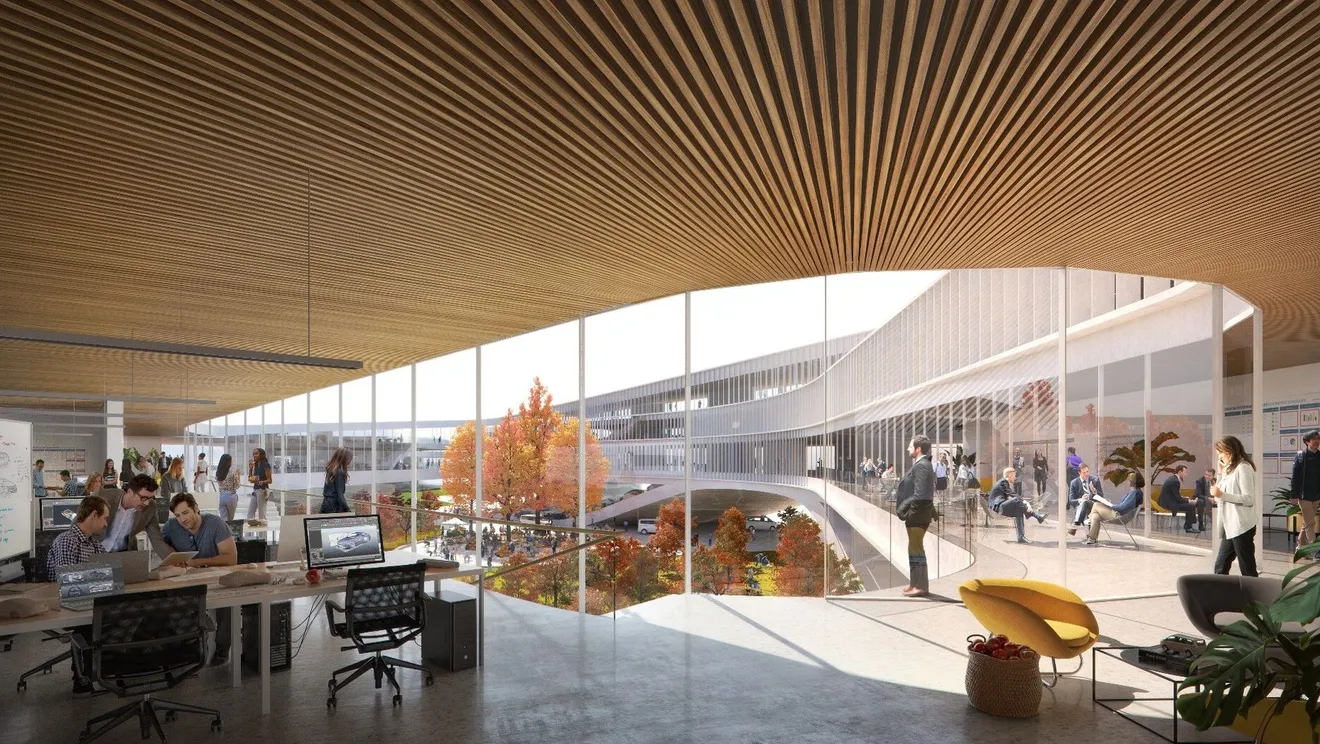
An early design vignette of the interior of the new Ford Deaborn Campus (Dearborn, MI) | Image via Ford
Cubicles in the Rearview
Work is changing fast. The companies that win will be the ones willing to leave “corporate tradition” in the rearview mirror. Ford just showed the rest of us what happens when you stop clinging to the old rules and start designing for what’s next. And if a company as steeped in history and tradition as Ford can reinvent itself, it’s proof that no legacy is too strong to evolve.
