
Each year Industrious chooses a theme around which to anchor our corporate strategy. One year it was about cementing our positioning in the market, another year about reaching for 'stretch' metrics, other years it's about focusing on meaningful improvements to our product offerings to level up our member experience. For 2025 the theme is 'Industrious U' (cue pomp & circumstance graduation walking march 🎓). Much like those formative college years, it's about a focus on individual growth through a wide array of intentional learning & development opportunities. Even more-so, it's about celebrating the individual and shared growth our work brings - Industrious is not just a work experience; but a social one, a cultural one, a time of deep personal development.
As designers and builders of the physical environment, it's not lost on me the impact the physical environment itself has on one's ability to develop, learn, and grow. At college: picture the bustling college quad, the late-night study sessions in the library, the spontaneous conversations on the walk between classes. College campuses aren’t just copy/paste places for any use or function - they’re carefully designed ecosystems that help foster connection, learning, and personal growth.
Compare that to the average office: lengthy commutes, stale environments, siloed team arrangements, a collection of seemingly random desks and half-furnished meeting rooms. As modern offices evolve, organizations have an opportunity to borrow from the campus model and create workplaces that people actually want to be in. Workplaces that promote connection and choice + foster social and cultural development rather than just 'butts in seats' or 'mandate for the sake of mandate'.
What lessons can we borrow from college campuses?
1. Diverse Spaces for Different Needs
On campus, you had a wide array of choices: quiet libraries for focus, cafés for social learning, labs for experimentation. Offices can mirror that same variety with intentional zones for deep focus, casual lounges for quick + informal collaboration, generous meeting + project rooms for teamwork, and high-tech innovation spaces. Colleges don't treat all majors or space types the same so why do we do so with the office archetype?
Duolingo's New York City office is a great example of this practice in action. Employees and visitors enter the space through an interactive art gallery. Users can choose to work or meet in bustling, energetic spaces like the 'Green Bean Cafe' or shared 'Cafeteria' or slow down in the quiet and contemplative 'Library' or plentiful 'Meeting Pods'. Take a peek behind the curtain in this video tour that's not only informative but also helps to serve as a talent recruitment tool (hello, college recruitment) HERE.
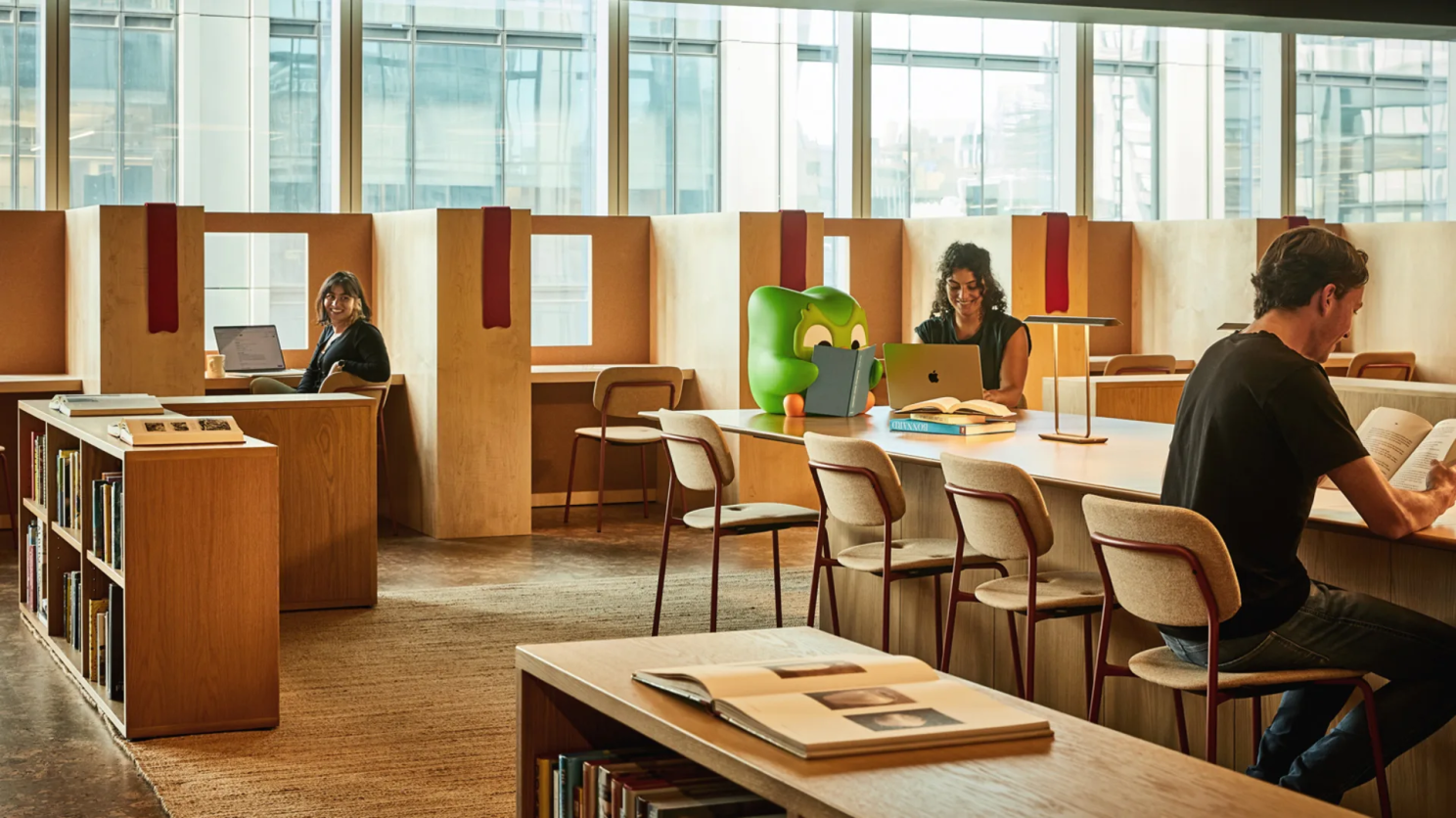
A quiet library environment within Duolingo's New York office | Image via Duolingo
2. A Central Commons at the Heart
Every campus has a “heart” - it may be a monumental statue, the student center, a dining hall, or a lush, green quad where people naturally gather. Good office environments need the same. A well-designed café, atrium, or lounge can become the workplace “town square,” anchoring the culture of the place and sparking those same spontaneous connections.
Google’s Bay View office in Mountain View, California has several of these "town squares" built-in. The first campus Google designed from scratch, it's laid out with team spaces on the upper level split into distinct 'neighborhoods' and gathering spaces below to separate focus and collaboration areas. Connecting those space types are ramps, stairwells, and other vertical transportation elements that are intended to foster collaboration and those serendipitous collisions all good public realms do. The project has been regarded as such a success, the team literallywrote a book about it with the intent of inspiring others to build more sustainable places that can benefit people and the planet.
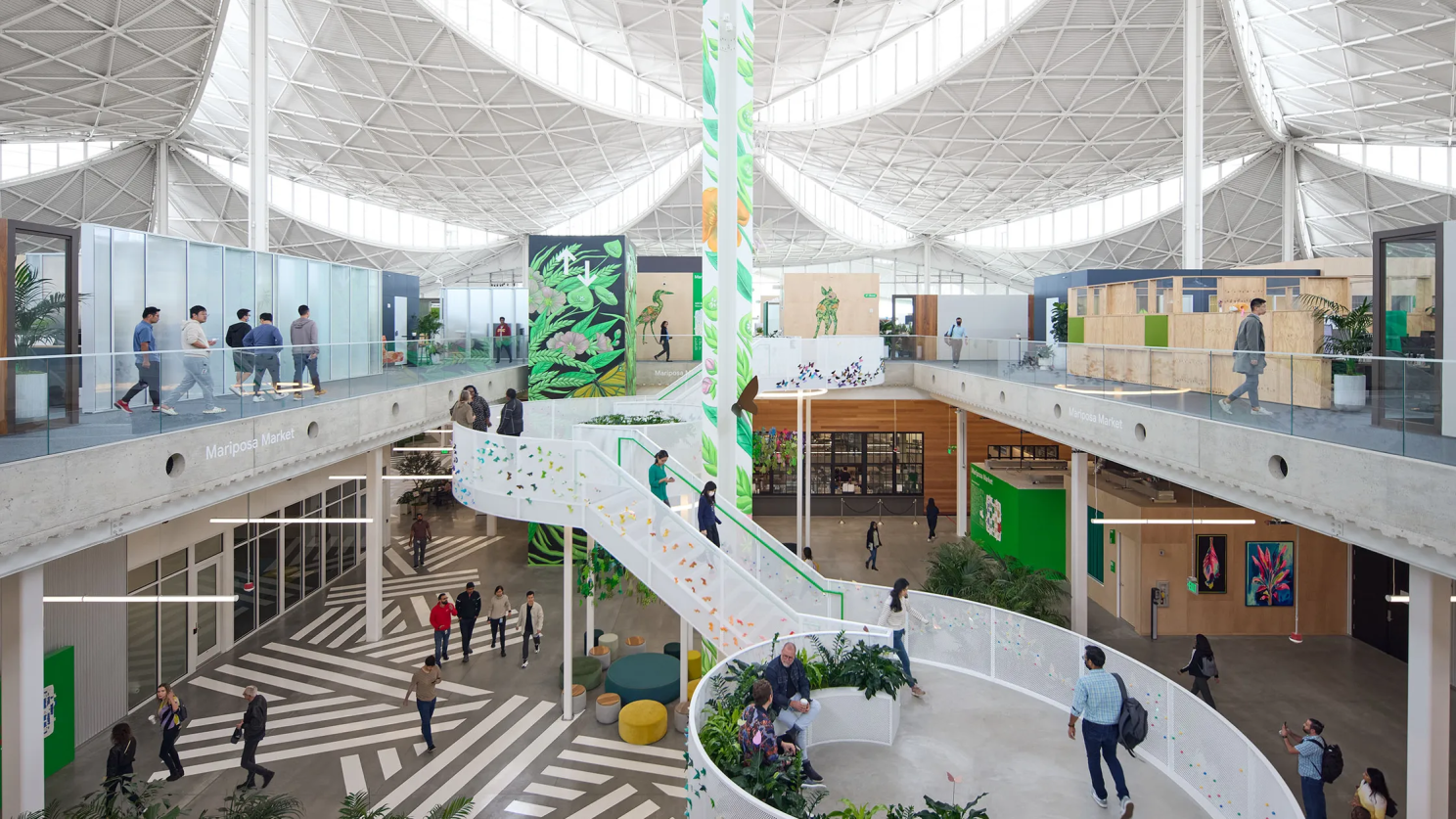
A crossroads within Google's Bay View Offices in Mountain View, California | Image via Google
3. Identity and Belonging
Campuses create pride through architecture, traditions, and symbols that tell a story. This could be something as explicit as a monumental 307 foot tower lit in signature burnt orange for major victories + events or as subtle as a simple architectural material that acts as a common thread throughout a campus. Offices can do the same by intentionally weaving company values, brand identity, and a hint of local character into the design. When employees feel the workplace reflects who they are and what they’re part of, connection deepens + a shared responsibility grows.
Major sports related companies tend to weave this idea and belonging best into their corporate design. Take for example Adidas' North American Headquarters Campus in Portland Oregon: vibrant and dynamic office environments encircle an active soccer pitch emblazoned with the iconic Adidas logo and branding. A monumental pair of signature Adidas Superstar Shoes with their signature three black stripes are proudly displayed outside the front door. Similarly the Beaverton, OR Nike Headquarters Campus is encircled with running + walking trails and Under Armor employees can take to the field or track on their Baltimore, MD corporate campus - in each case, manifesting a deep-rooted culture of health & wellness through the built environment.
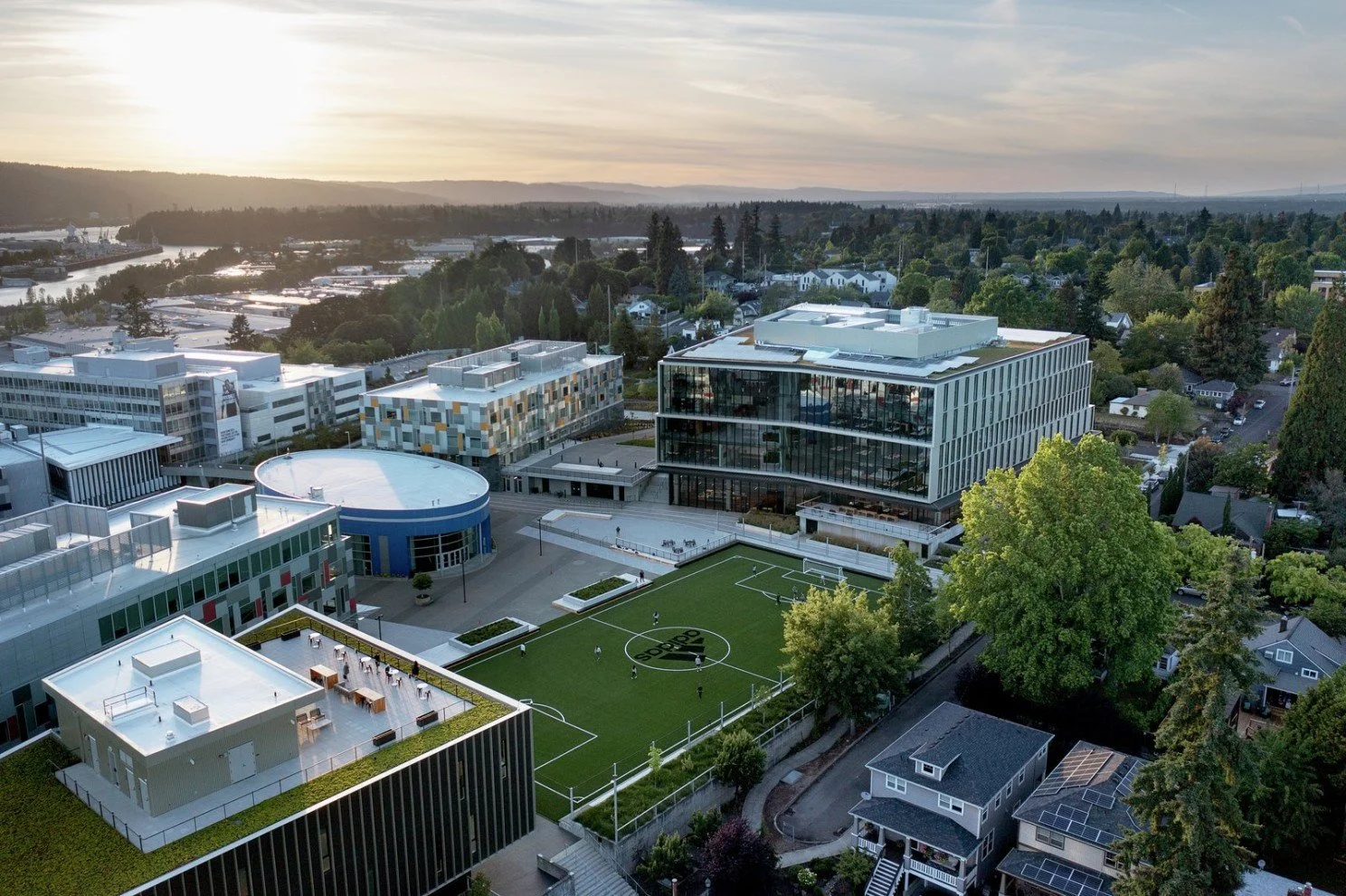
Active play within Adidas' North American Headquarters Campus in Portland, Oregon | Image via Adidas
Leveling Up The Workplace
The future of the office isn’t about “butts in seats” or mandates for the sake of mandates. It’s about building intentional ecosystems people choose to be part of - places that spark serendipity, foster belonging, and fuel personal + professional growth. College campuses have been doing this for centuries, balancing focus and community, identity and movement, tradition and experimentation. We should expect nothing less from our office environments.
If college gave us a place to grow up, the office should give us a place to level up.
