
As we emerge from the pandemic and workplaces around the globe right-size for a future flexible working world, a glut of office space exists in the market at levels never seen before. At the same time, inflation, high labor + material costs, and pandemic undersupply have driven up the cost of housing leading to a housing shortage of between 4 and 7 million homes in the US. So naturally we should just turn all of those vacant and underutilized office spaces into habitats for people, right?
This is easier said than done for a variety of factors. Interestingly, these same factors represent some of the largest mistakes we made when planning and designing offices of the past including:
Deep Floor-plates - while residential buildings are often broken up by internal courtyards or stuffed with parking as in the case of the Texas Donut (yes - this is a real term), office buildings tend to have much larger floor-plates sometimes spanning as wide as a full city block. This allows for maximum internal flexibility and consolidates expensive design elements like restrooms and vertical transportation systems. When carving up offices for residential conversions, one big challenge is figuring out what to do with all that empty middle space; this makes narrower, more linear, and/or irregular floorplans more attractive.
Limited Access to Natural Light - where some office uses may prefer windowless rooms, windows are a requirement for bedrooms and absolutely necessary for creating a living space people actually would want to inhabit. Not only is natural light a common code requirement in housing, it's proven to have many positive health and wellness benefits. Where windows are already present in offices, glass tinting or window inoperability can produce additional challenges for office-to-residential conversion projects.
Low Ceilings - many office spaces don't have the necessary density of HVAC, power, and plumbing infrastructure to support residential use. This means ceilings in office spaces must be high enough to be able to support the additional required service equipment. Finding higher ceilings can be particularly challenging in older class B and C office buildings, which also have the highest vacancy rates nationally.
Few Amenities - amenities have become an arms race of sorts for new construction residential developments; swimming pools, saunas, rooftop lounges, co-working lounges, and speakeasy's are a must. Attempts to shoehorn these and other amenities into dead office spaces retroactively is a much more difficult and costly process than with new construction. This challenges are only compounded in taller towers where residents often have little to no connectivity to green-space or fresh outside air.
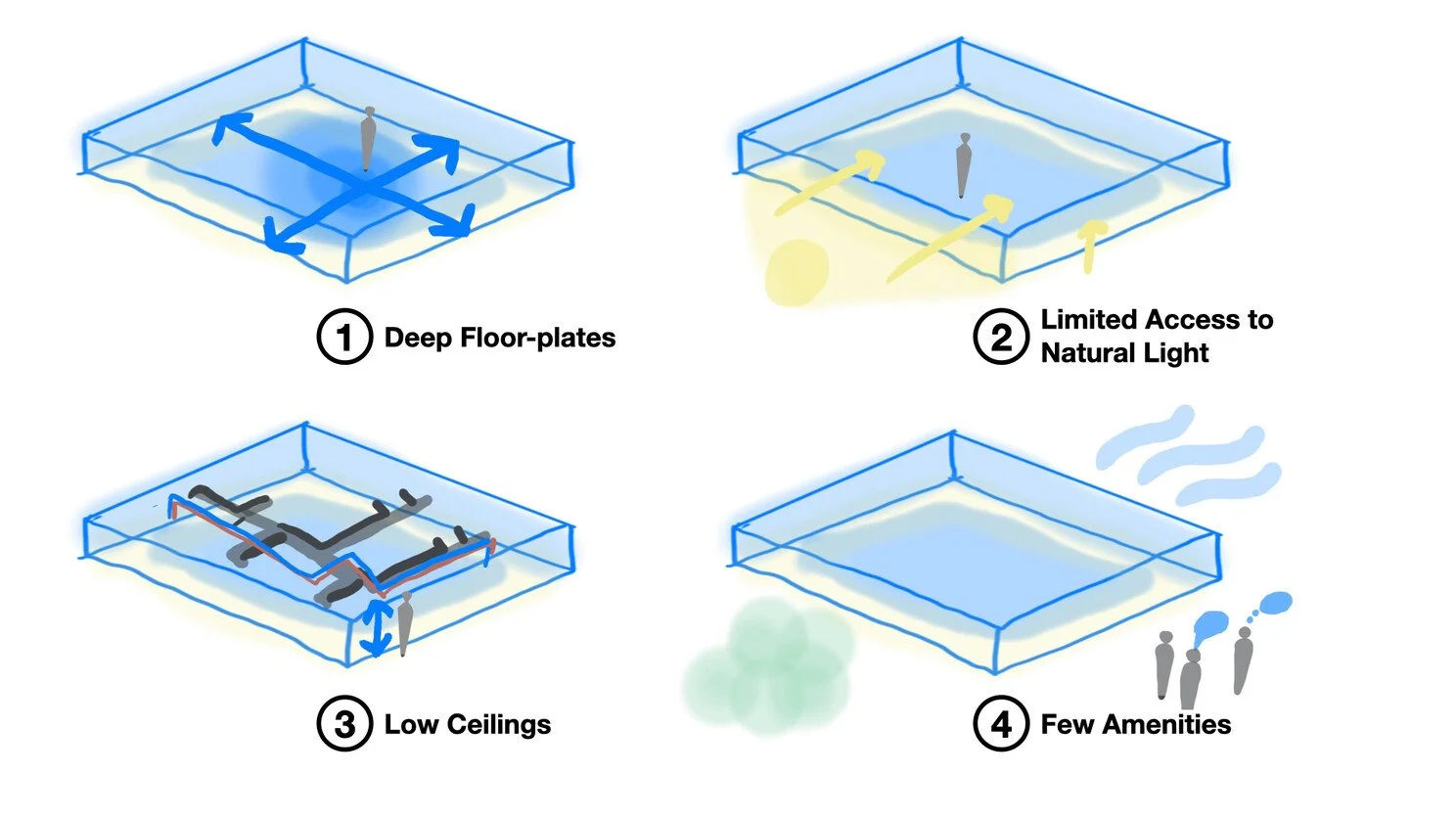
Challenges with office-to-residential conversion | Diagram by Brendan Gregory
These and other factors are the primary reason that while ~20% of offices sit vacant in many major cities, only 2% are undergoing any sort of residential conversion according to data from CBRE. The few projects that do get off the ground are met with immense logistical and funding challenges including a 44-story "affordable" office-to-residential retrofit in Atlanta purported to cost north of $400 million. At that price, why not just start from the ground-up? Recent data suggests dorm-style housing conversions, also commonly referred to as "co-living", may be a better fit for conversions. In these spaces, residents share common amenities like kitchens, bathrooms, and laundry meaning these uses can be consolidated saving on retrofit costs. Historically these co-living properties have had their own challenges with residents experiencing privacy and safety concerns that don't always outweigh the cost savings and benefits of a shared community.
The real question is why did we let our offices become such bulking, windowless, claustrophobic, and inhospitable spaces? Rather than designing for the "machine of work", the best modern workplaces incorporate more residential-like features including access to:
More compact floor-plates with direct access to ample green-space, fresh outside air, and abundant natural light (see modern groundscapers)
Generous and warm spaces of a variety of sizes allowing for a variety of work styles
Plentiful amenities fostering playfulness, creativity, collaboration, and conversation
Ultimately, the difficulty of converting office space into dwellings isn’t just a design or constructibility challenge—it’s a reflection of how our workspaces have historically been built for tasks, not for people. While this isn't the only reason to rethink workplace design & strategy, the modern offices being constructed today will make for better housing units tomorrow and it's workers that will benefit from that transformation.
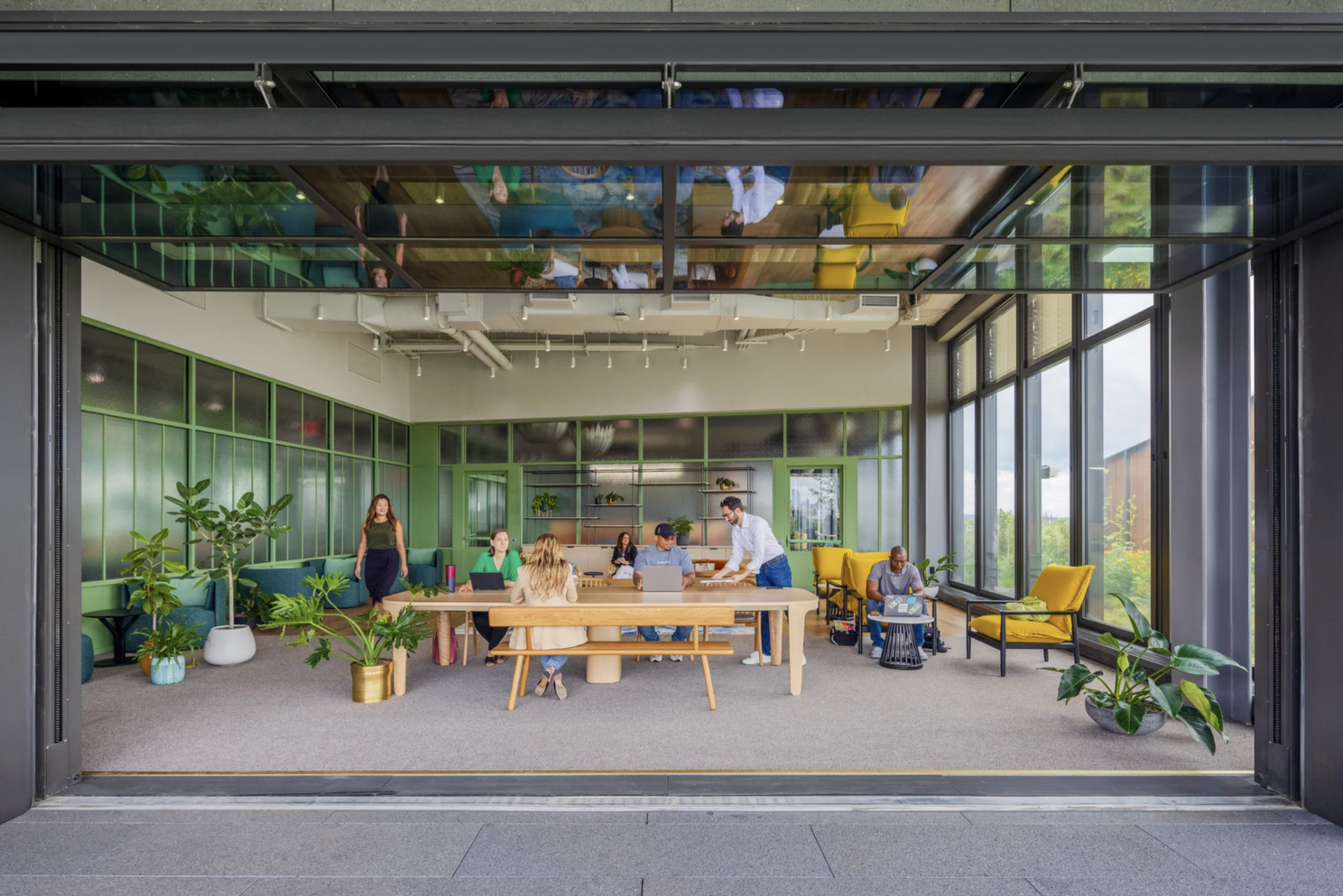
A bright, communal, indoor/outdoor workspace within the new Google NYC Office at St. John's Terminal (New York, NY) | Design by COOKFOX & Gensler, Image by Google
