
I've been critical of the suburbs in several of my recent posts. Some of the criticism is warranted as we've made a lot of mistakes when planning and designing American Suburbia. Endless "drive til' you qualify" sprawl, wasteful single-mode transportation networks, mandatory parking minimums, and separated land use (among many other issues) have contributed to a landscape that is often isolated, inhumane, and wasteful.
It's not all bad news, though. Some of the biggest planning, design, and construction mistakes of the past present the greatest opportunity to make corrections and create an infinitely more productive environment that even the most steadfast urbanists would be proud to call home. Where can we start?
Targeted Density
Some of the most wasteful land uses - dying shopping malls, suburban office parks, and sprawling big box retail - can be come a canvas for the reimagining & retrofitting of suburbia. A concept coined by June Williamson and Ellen Dunham-Jones in their publications on Retrofitting Suburbia (highly recommend), the concept reimagines these underperforming suburban properties transforming waste & sprawl into more sustainable, community-serving purposes. One such success story is the former Villa Italia Mall in Lakewood (Denver Region), CO. When it originally opened in 1966, the mall was one of the largest enclosed shopping centers in the region. Over time, as retail trends changed and consumers preferences shifted towards open-air shopping centers and more e-commerce, the 800,000+ square feet of retail space emptied out. As the suburbs grew up around the mall, the land the former mall sat on went from being on the exurban fringes to an edge city of its own. Realizing the value of the land, the city partnered with developers in the early 2000's to transform the defunct mall into a 22 block mixed-use community complete with shops, restaurants, retail, and over 1,200 residences - a true downtown for Lakewood, CO. Massive parking lots and low density single-use space was traded for a mixed use village, green-space, and complete streets. Quality of life improvements weren't the only benefits of the redevelopment - property taxes and sales tax revenue contribute $17 million annually to Lakewood, Colorado's revenue.
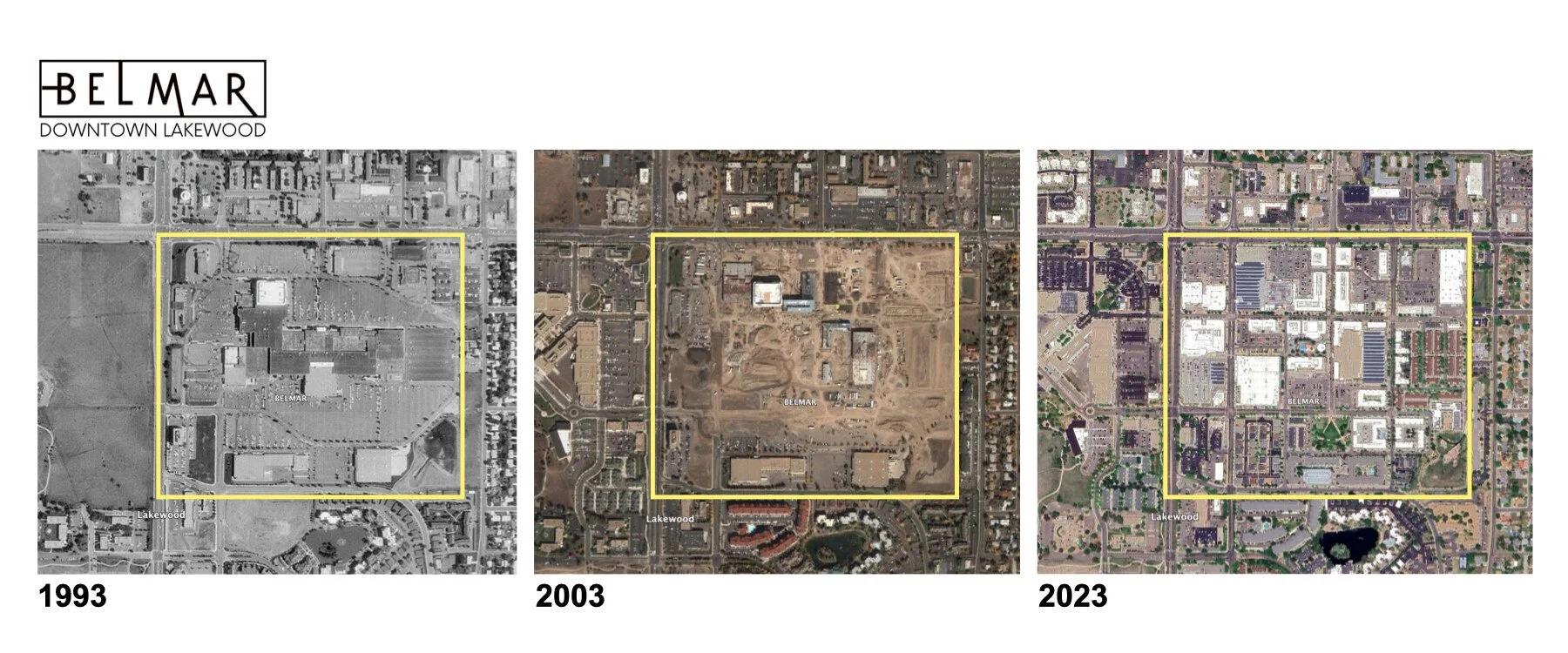
The transformation of the Villa Italia Mall from monolithic shopping center to a walkable, mixed-use downtown district [Lakewood, CO] | Images from Google Earth
Mixing Land Uses
Another similar success story, TheVan Aken District in Shaker Heights (Cleveland Region), Ohio, sought to turn a glorified mid-century strip mall into a multi-story, mixed-use, office, retail, green-space, & residential destination. Situated at the terminus of the RTA's green line, the property was an ideal location to add in some diversified land uses and create a vibrant, walkable gateway for the surrounding community to connect, engage, and gather. The transit adjacency meant parking could be reduced and what limited parking remained, was relegated to activity-wrapped parking structures leaving more space for people and places. Where other suburbs of Cleveland are shrinking and suburban retail storefronts are closing, The Van Aken District generates in excess of $1.6 million in property taxes and $600,000 in income taxes each year. The development has also led net creation of 700+ permanent jobs.
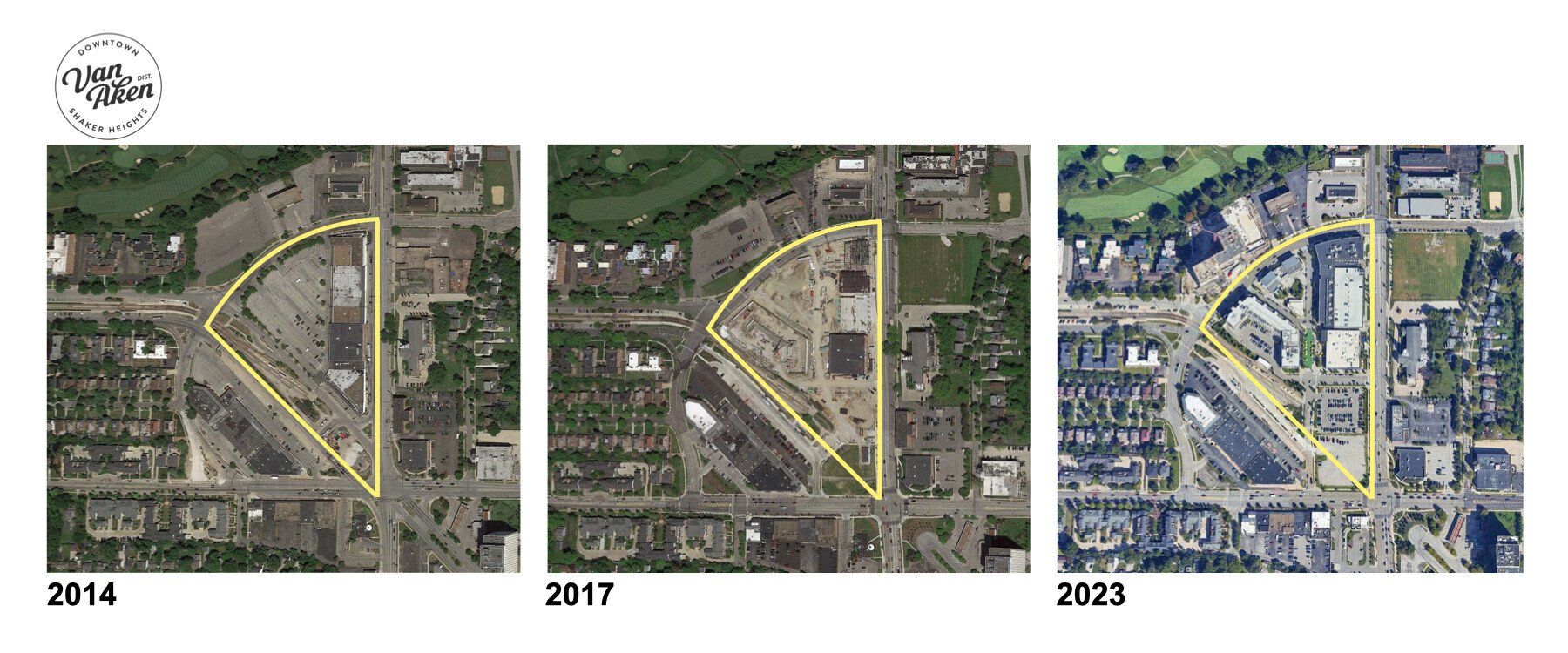
A single story retail center finding new life as a lively, urban hub called The Van Aken District [Shaker Heights, OH] | Images from Google Earth
Improving + Diversifying Transportation Networks
Most suburban transportation networks were designed with one thing in mind: the automobile. As post-war sprawl creeped ever further from the city center, cars infinitely extended the reach of cities. The downside: car-centric development has numerous known and unknown negative consequences:
Social Isolation - those random & chance encounters that don't happen when we're belted in, tucked behind a steering wheel, and blasting 'Waterfalls' by TLC.
Negative Impacts on Small Businesses - auto-centric infrastructure is land and capital intensive. Lowering the cost of entry for business results in less monopolistic big-box retail and a more diverse, walkable, and human-scale environment.
Public Health Consequences - streets are dangerous. Slowing cars and turning over more space to cyclists, pedestrians, and other transportation modes improves health outcomes (short term and long term, physical, mental, and otherwise).
Discrimination - against those who cannot drive or cannot afford to drive; an inequity that many have not experienced unless they've attempted to catch a bus or travel in a wheelchair down a busy 10+ lane thoroughfare devoid of crosswalks.
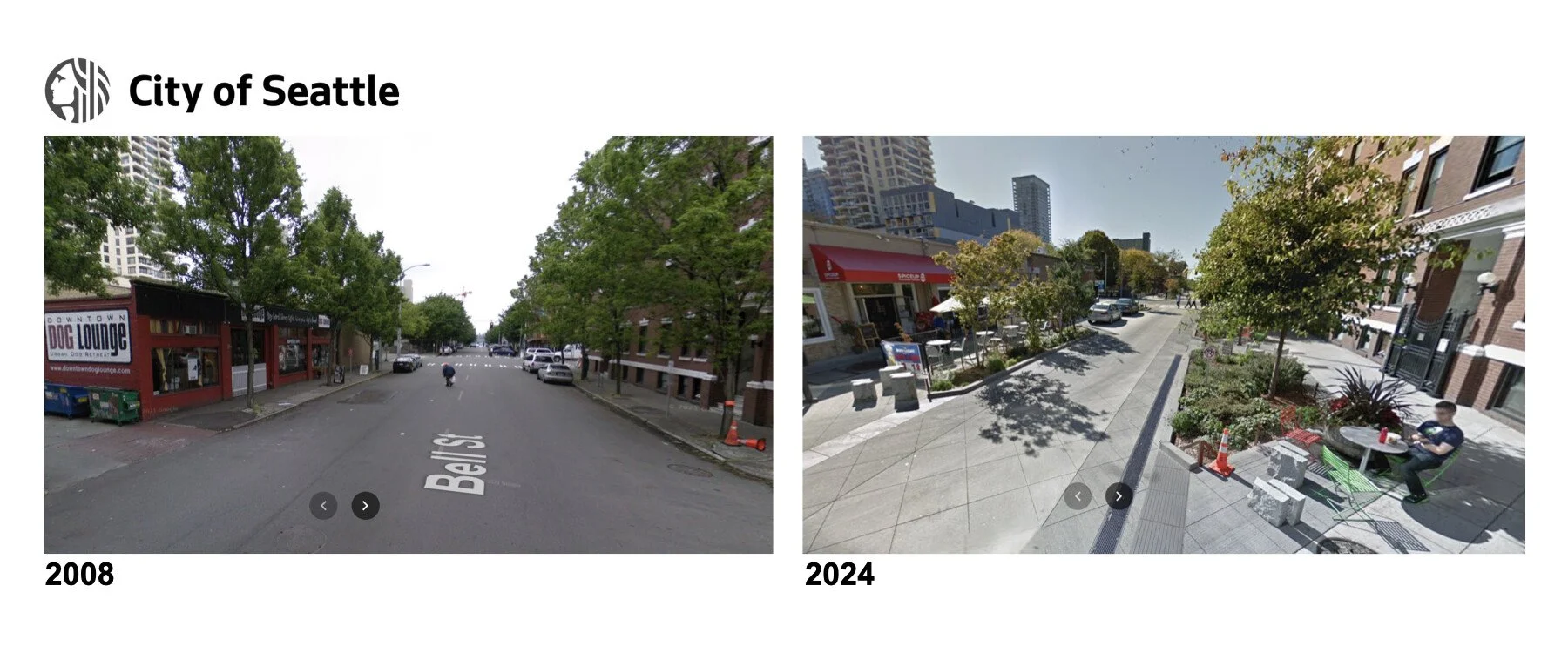
A complete street makeover where empty asphalt was traded for equitable green-space, bike lanes, and more space for pedestrians [Seattle, WA] | Images from Google Earth
Reducing and Repurposing Parking
The glut of car infrastructure can also be tackled by reducing and repurposing our vast amounts of structured and surface parking. Instead of mandatory parking minimums, cities should look to institute mandatory parking maximums via zoning code reform and reward development that promotes alternative means of transportation like mass transit or bicycles. Cars have won out as our primary means of conveyance only because of the decades of subsides provided in the form of roads, interstates, and expansive + free asphalt parking lots. Those very same parking lots now provide an opportunity to create more dense, walkable, and productive environments. As with the previous examples, High Street situated in suburban Dunwoody/Perimeter (Atlanta Region), Georgia took land that was once characterized by low-slung office buildings and abundant surface parking and transformed that land into a mixed-use live/work/play destination. Adjacent to the Dunwoody MARTA station, the project added 150,000 square feet of retail and restaurants, 90,000 square feet of new offices, over 600 residences, and a 3/4 acre park to over 222,000 square feet of existing office. The project has recently started welcoming its first residents as the retail fills up and the developer readies for phase II.
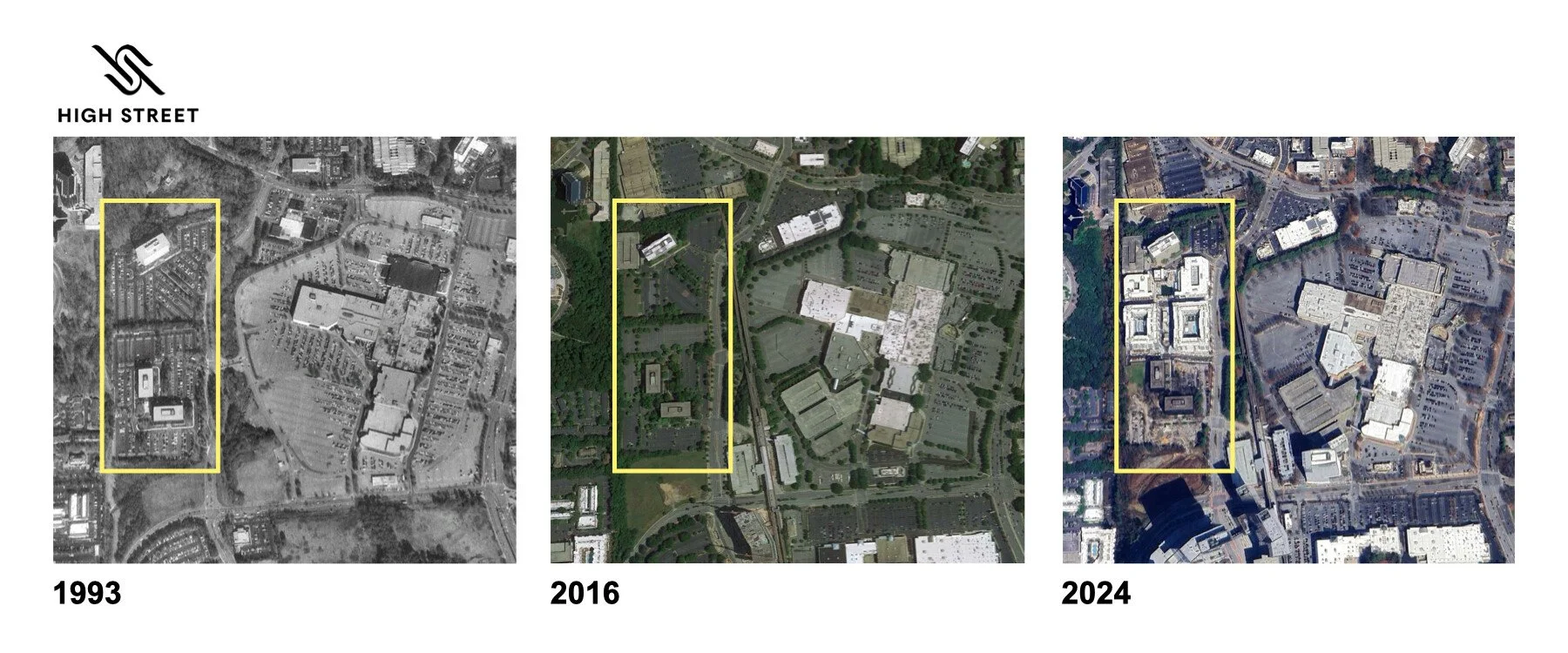
A low-density, suburban office park filled out with new community retail, office, and residential uses - High Street [Atlanta, GA] | Images from Google Earth
The Opportunity
Land that was once on the edges of cities has been leapfrogged and those dying shopping malls, low-rise suburban office parks, and sprawling big box retail centers now present a once in a generation opportunity. That opportunity: to add targeted density, mix land uses, improve + diversity transportation networks, and reduce + repurpose parking into more vibrant, walkable, healthy, productive, sustainable, and human-centric development. Some of the broken vestiges of early suburbia may be dead but the suburbs are certainly not - much of suburbia is just coming alive.
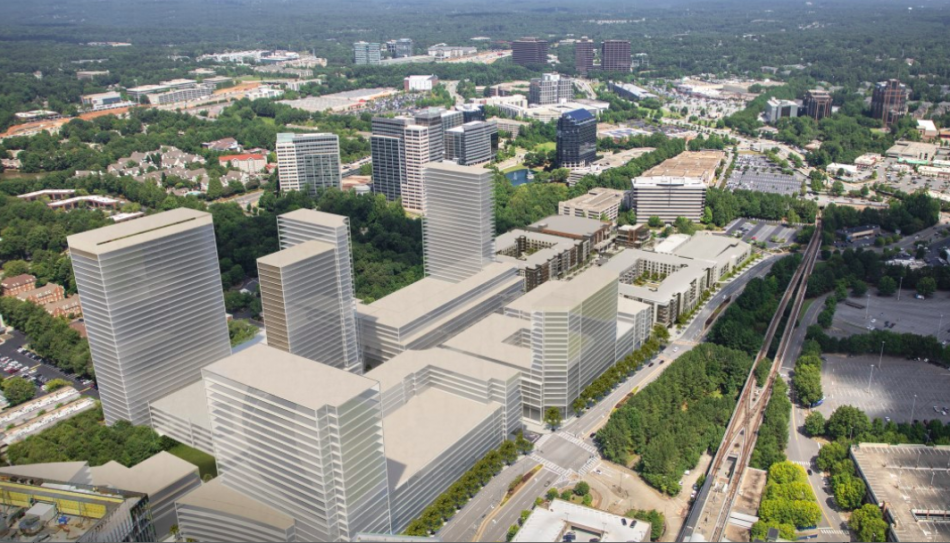
Future planned phases of High Street redevelopment [Atlanta, GA] | Development from GID Development Group and design by Dwell Design Studio
