
During a week where Amazon dominated most of the workplace headlines (seriously, who goes into the office 5 days a week anymore), some big news emerged surrounding the new Starbucks CEO's corporate turnaround strategy. Amidst several quarters of declining store sales and profits, Starbucks ousted their former CEO in August and called upon former Chipotle CEO Brian Niccol to revamp the brand. Niccol is credited with pulling the fast casual burrito chain out of a tumultuous health safety crisis, bumping stock prices over +700%, and steadily increasing same store sales + restaurant-level margins over his successful 6 year tenure. Having experienced similarly strong results during his short stint as CEO of Taco Bell, the hire looks to be a slam dunk for the coffee chain struggling to rediscover its identity. His bold vision for Starbucks: "making the customer experience less transactional and getting Starbucks back to Starbucks."
In an open letter to all partners, customers, and stakeholders, Niccol called out four primary areas of focus he plans on tackling in the first 100 days at the helm:
Empowering our baristas to take care of our customers
Get the morning right, every morning
Reestablishing Starbucks as the community coffeehouse
Telling our story
Having drifted from its core, Niccol is looking to return Starbucks to the basics and rectify some mistakes that have caused the chain to depart from its cool roots. One can't help but see some parallels to the workplace environment. Fresh out of a global pandemic and with the benefit of having functioned remotely for an extended period of time, the office is not the same place it used to be pre-covid and its time to take a step back and consider some corrective actions. Within Niccol's list of four primary areas of focus lies an opportunity for designers, architects, and workplace strategists to make the office less transactional and inspire a return to office by employee choice, not just for the sake of mandate.
"Empowering our baristas to take care of our customers" (1)
Starbucks: Empowering our baristas to take care of our customers: We’ll make sure our baristas have the tools and time to craft great drinks every time, delivered personally to each customer. For our partners, we’ll build on our tradition of leadership in retail by making Starbucks the best place to work, with career opportunities and a clear path to growth.
Work.place: People are at the core of any company. Time in-office should prioritize that in-person connection and any opportunities for inter-office cross-pollination or in-person mentorship. Save Zoom heavy days for WFH and instead take advantage of break-out collaboration spaces and huddle rooms to solve that tricky problem in-person. Expanded business service offerings from a coworking provider (mail service, lunch and learns, networking events, etc.) can help to further sweeten those limited in-person days.
"Get the morning right, every morning" (2)
Starbucks: Get the morning right, every morning: People start their day with us, and we need to meet their expectations. This means delivering outstanding drinks and food, on time, every time.
Work.place: Lukewarm coffee and stale vending machine snacks aren't going to cut it. Expanded F&B offerings in a comfortable, inviting space or even the full service hospitality of a coworking space can really elevate the workplace experience and make for great days. People have gotten used to their routines at home. Often they are looking for a reason to break out of the monotony, feed the appetite for social interaction, and start the morning off on the right foot - a sense of belonging and the mental health benefits of community are added benefits of enjoying that flavored sparkling water or locally crafted pastry.
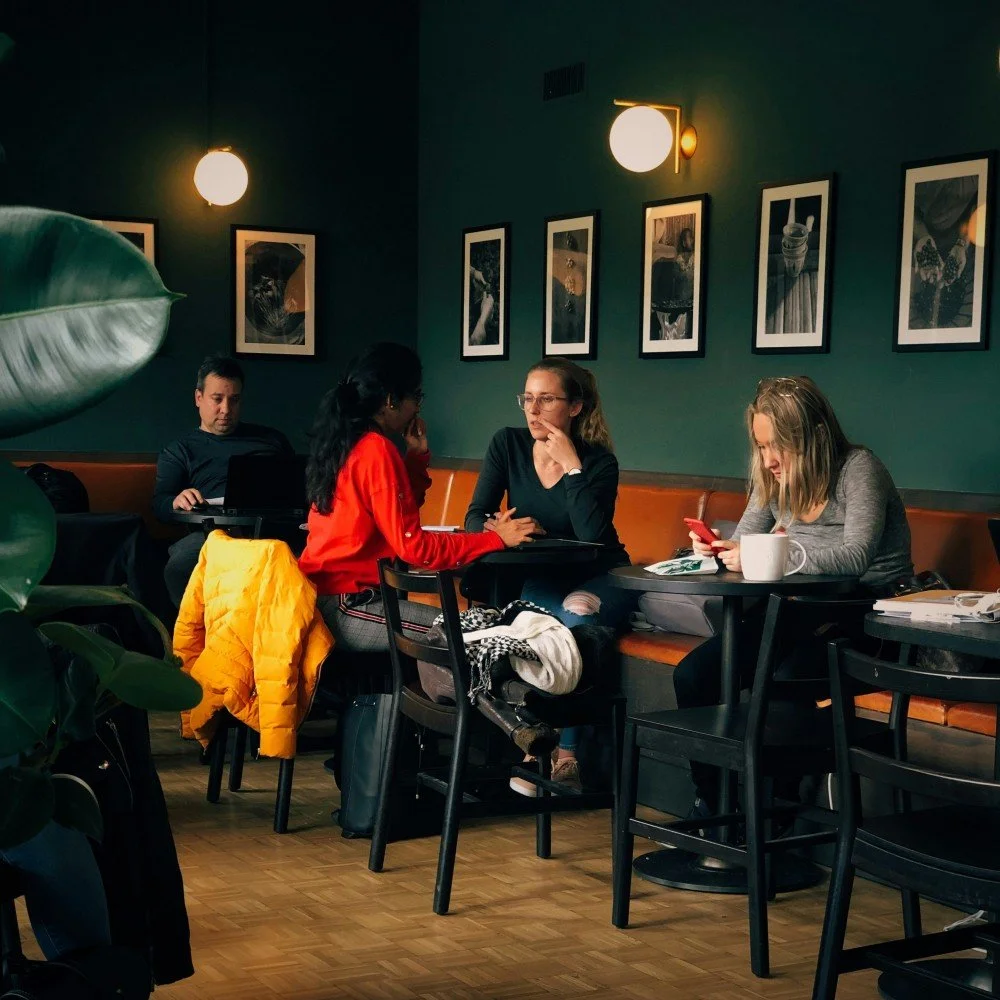
Photo by Behzad Ghaffarian via Unsplash
"Reestablishing Starbucks as the community coffeehouse" (3)
Starbucks: Reestablishing Starbucks as the community coffeehouse: We’re committed to elevating the in-store experience — ensuring our spaces reflect the sights, smells and sounds that define Starbucks. Our stores will be inviting places to linger, with comfortable seating, thoughtful design and a clear distinction between “to-go” and “for-here” service.
Work.place: Much like Starbucks, the workplace has become increasingly transactional over time. One singular 10'x10' space per employee outfitted with the standard prefabricated work surface, particle board storage cubby, and squeaky mesh office chair. Outside the building, one singular 9'x18' parking stall per employee for the cogs to make their way between workstation and home-base. With technology allowing a greater number of employees to carry out their work and be productive from anywhere, the workplace is competing not just with the home office, but with coffee shops, restaurants, hotels, health clubs, and other community "third places." This has caused designers and workplace strategists to craft more cozy, welcoming, and accessible workplaces and lean fully into Work.place as Third Place. Differentiating 'to-go from 'for-here' experience is critical as well. Not all tasks, workdays, or roles are the same - crafting a variety of spaces from the quiet wellness retreat up to the 200 person town-hall allows for a wider selection of settings and ultimate employee choice rather than the one-size-fits-all solutions of yesteryear.
"Telling Our Story" (4)
Starbucks: Telling our story: It’s time for us to tell our story again — reminding people of our unmatched coffee expertise, our role in communities and the special experience that only Starbucks can provide. We won’t let others define who we are.
Work.place: At the end of the day, people need to be woo-ed to leave the comfort and security of their homes for the office (or any other experience). Starbucks made a name for itself by focusing on a consistent customer experience, strong marketing + customer engagement, and an untouchable brand image. It didn't copy its competition - some might argue it didn't even care all that much about making a good cup of coffee - but what it did do was carve out a lane for that space between home and work where community happens and all are welcome. Any company can throw some sterile cubicles in an empty office floor-plate. It's the Nvidia's, Apple's, and Nike's of the world (among others) that use workplace not just as a physical environment with which to hold people, but as a built representation of what the organization stands for, values, and embodies.
The open letter from Niccol is signed 'chairman and ceo' - lower case and certainly by no accident, democratizing this turnaround and putting the onus on each and every individual stakeholder. Only time will tell if Brian Niccol's Starbucks turnaround is successful but he appears to have identified the right building blocks to kickstart the transformation and bring the chain back to its roots - building blocks that could also help transform any workplace environment. By brewing a culture of employee empowerment, focusing on the individual experience, crafting more third places, and authoring your own story, future workplaces can turn any challenge into a cup of success—just like Starbucks.
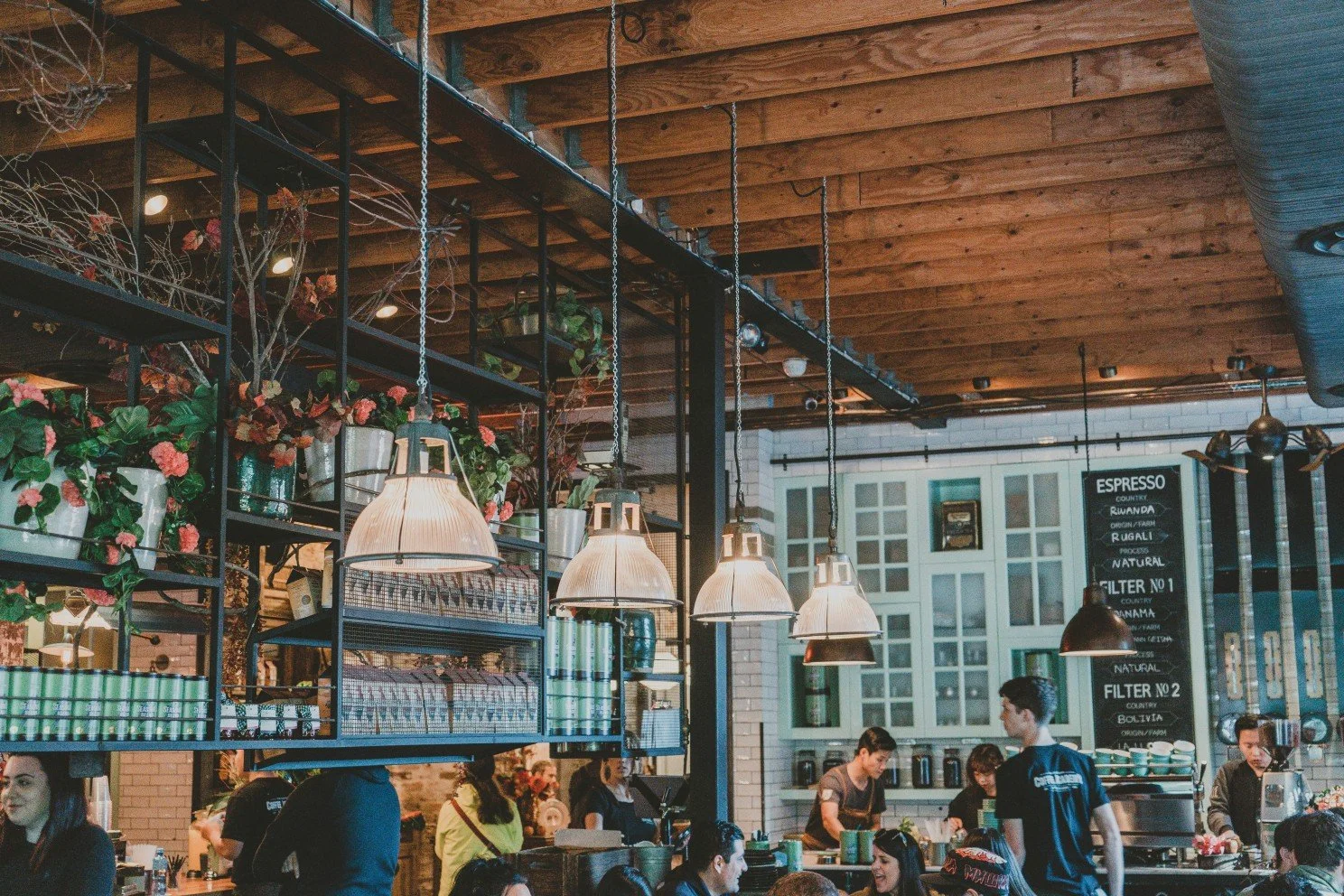
Photo by Rod Long via Unsplash
