
Salesforce made a big splash back in 2014 when it signed on as the anchor tenant of "The Transbay Tower" in San Francisco, CA. The cloud-computing company inked a $560 million, 15 1/2 year deal to take 714,000 square feet of the 1.4 million square foot, 61-story landmark tower. This lease was in addition to 500,000+ square feet the company already leased in SoMa (South of Market) towers within the central business district of SF.
Rising to a height of 1,070 feet, once completed in 2017 the tower became the tallest building in San Francisco, the second tallest building west of the Mississippi, and the 12th tallest building in the United States. Designed by Argentine-American architect César Pelli, the obelisk-shaped tower is adorned with reflective glass + steel and topped with a 6-story, 11,000 LED light rhythmic art feature titled "Day for Night."
It's probably an understatement to say that since moving into Salesforce Tower, there have been seismic shifts (no pun intended) in workplace strategy, office design, and building construction. With the growing number of companies opting for hybrid or more flexible working arrangements, office footprints have been in a constant state of flux. Since the tower opened, Salesforce itself has shrunk its own office footprint by 45% to 900,000 square feet today, down from 1.6 million+ square feet only a year ago according to regulatory filings. This reduced figure includes 125,000 square feet of space at Salesforce Tower which has been marketed for sublease.
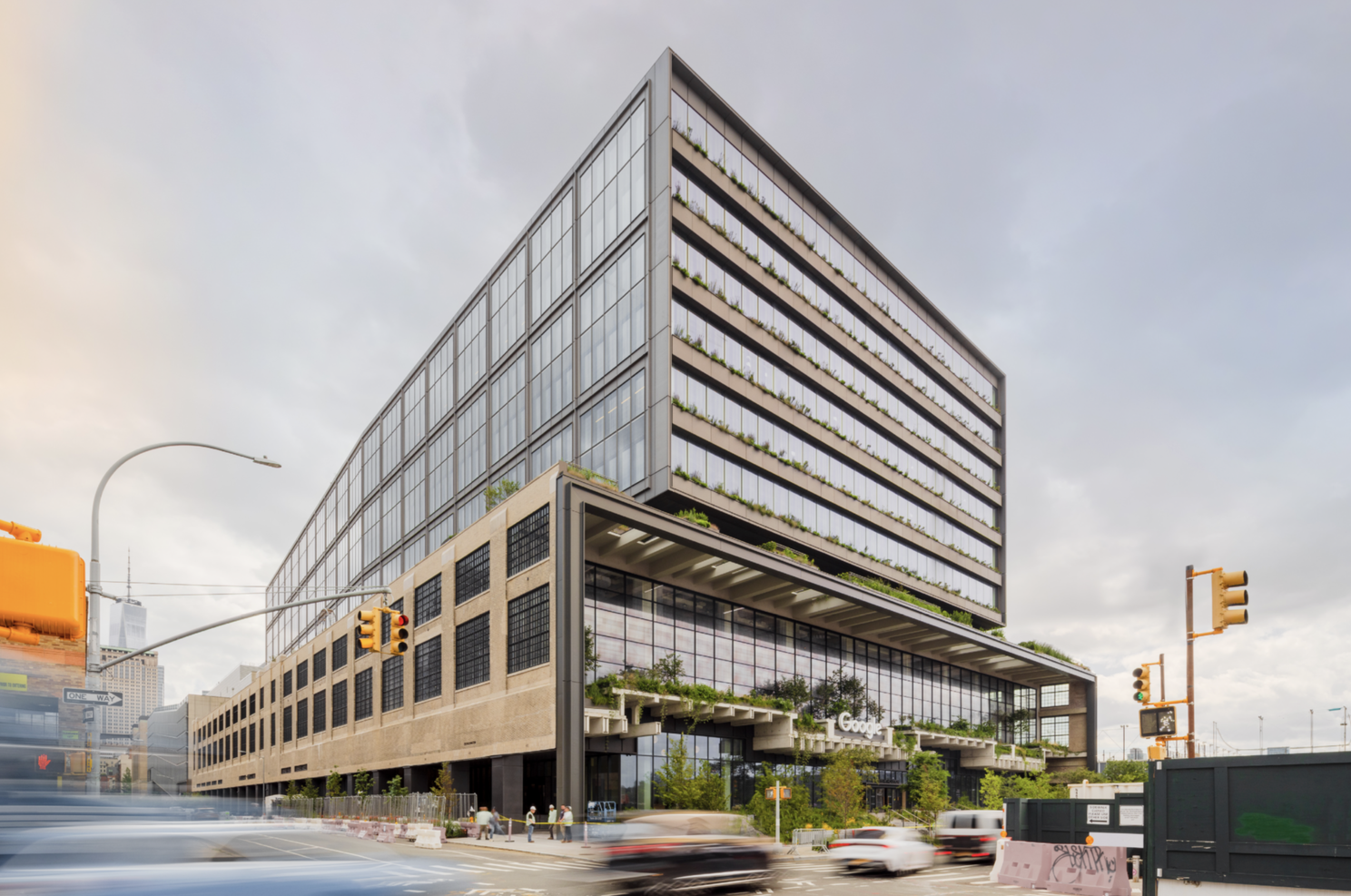
St. John's Terminal (New York, NY) - Google NYC Office | Design by COOKFOX, Image by Google
But it isn't just office footprints that have shifted over the last decade and since the global pandemic, it's also the form of the modern workplace. Tech companies, financial services firms, and professional + consumer services businesses alike are trading CBD trophy towers for more earth-hugging, distributed digs often referred to as "groundscapers." While there is no formal definition for a "groundscaper", it's commonly characterized by footprints of a million or more square feet across only a few stories. These structures can be new construction or even adaptive reuse bringing new life to underutilized freight terminals, wholesale markets, post offices, warehouses, port facilities, and other urban structures.
St. John's Terminal, new home to even more Upper West Side NYC Googler's, is a recent example. Melding old with new, the project spans the equivalent of two city blocks juxtaposing a new glassy tower with 100,000 square foot floor-plates atop the original 1930's rail terminal. Designed by COOKFOX, the reimagined St. John's Terminal includes 1.5 acres of vegetation, a completely shared "neighborhood seating" model, communal gathering spaces, and wide open floors with ample natural light + sweeping 15 foot ceilings.
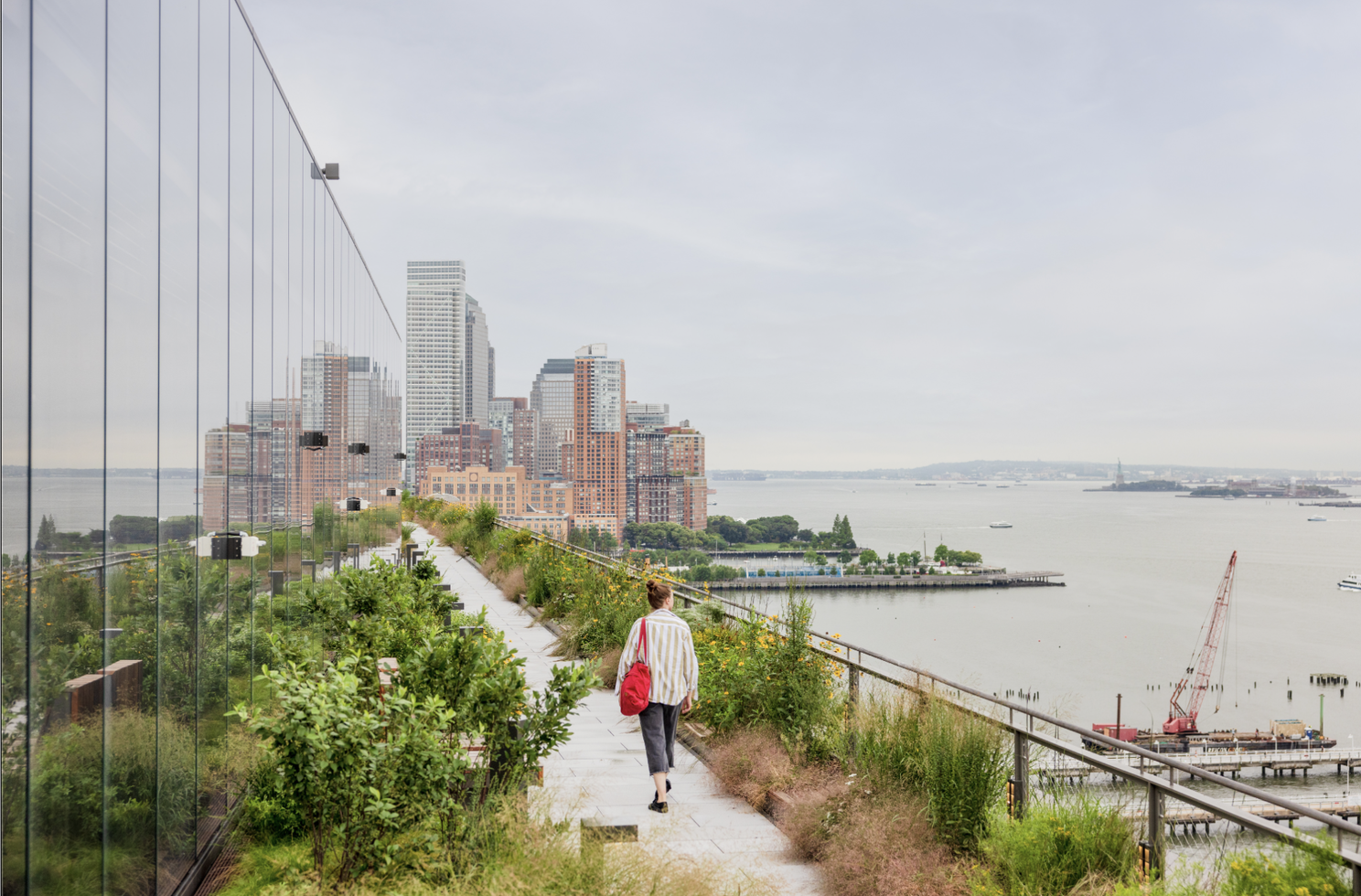
St. John's Terminal (New York, NY) - Google NYC Office | Design by COOKFOX, Image by Google
"Groundscrapers" may not capture the same headlines as monumental leases in urban trophy towers but there are several factors making them an increasingly attractive option:
Fostering Creativity, Culture, & Collaboration - With the wider adoption of hybrid and more flexible working schedules, collaboration and spontaneous interaction during in-office time is as critical as ever. In this arrangement, quick, informal meetings can be facilitated which has the potential to lead to faster decision-making and more creative problem-solving. Co-locating on a lesser number of floors also minimizes the time and effort spent navigating between different levels, making it more convenient for employees to work together and access shared resources. The culture of a company can be positively impacted through a more compact layout as employees are more likely to interact and form connections when they are in closer proximity to one another.
Greater number of entry/exit points - Allowing freer access to a building can help reduce congestion during peak times such as the start and end of the workday. Additionally, multiple access points can improve safety and security by providing alternative evacuation routes in case of emergencies and allowing for greater social distancing; particularly valuable in maintaining post-pandemic health protocols. Allowing an office to spill out into the surrounding community and become a natural extension of the shops, dining, and street life is yet another added benefit to this arrangement. The office isn't a walled off, secured fortress in the exurbs of the city but rather part of the life & vibrancy of the community.
Greater connectivity to nature - Spreading the workplace out over a lesser number of larger floor-plates can also provide for greater connectivity to natural surroundings. It's well documented that exposure to natural elements such as greenery, natural light, and outdoor views, has been shown to reduce stress, boost mood, and improve mental well-being. These positive effects can help improve focus, spur creativity, and increase job satisfaction (which in turn can increase productivity and reduce absenteeism or employee turnover). The thoughtful weaving of natural elements into office design contributes greatly to creating an environment that is aesthetically pleasing, inviting, tranquil, and inspiring.
Lower costs - Lastly, fewer floors or more distributed floors can reduce the need for costly vertical infrastructure, such as elevators, stairwells, and additional HVAC systems, which can significantly drive up construction and maintenance expenses. Strategic use of limited open stairwells, atriums, and bridges can help open up sight-lines and increase connectivity across the few floors that do exist. A more compact, horizontal layout can lead to significant savings in both upfront and ongoing costs.
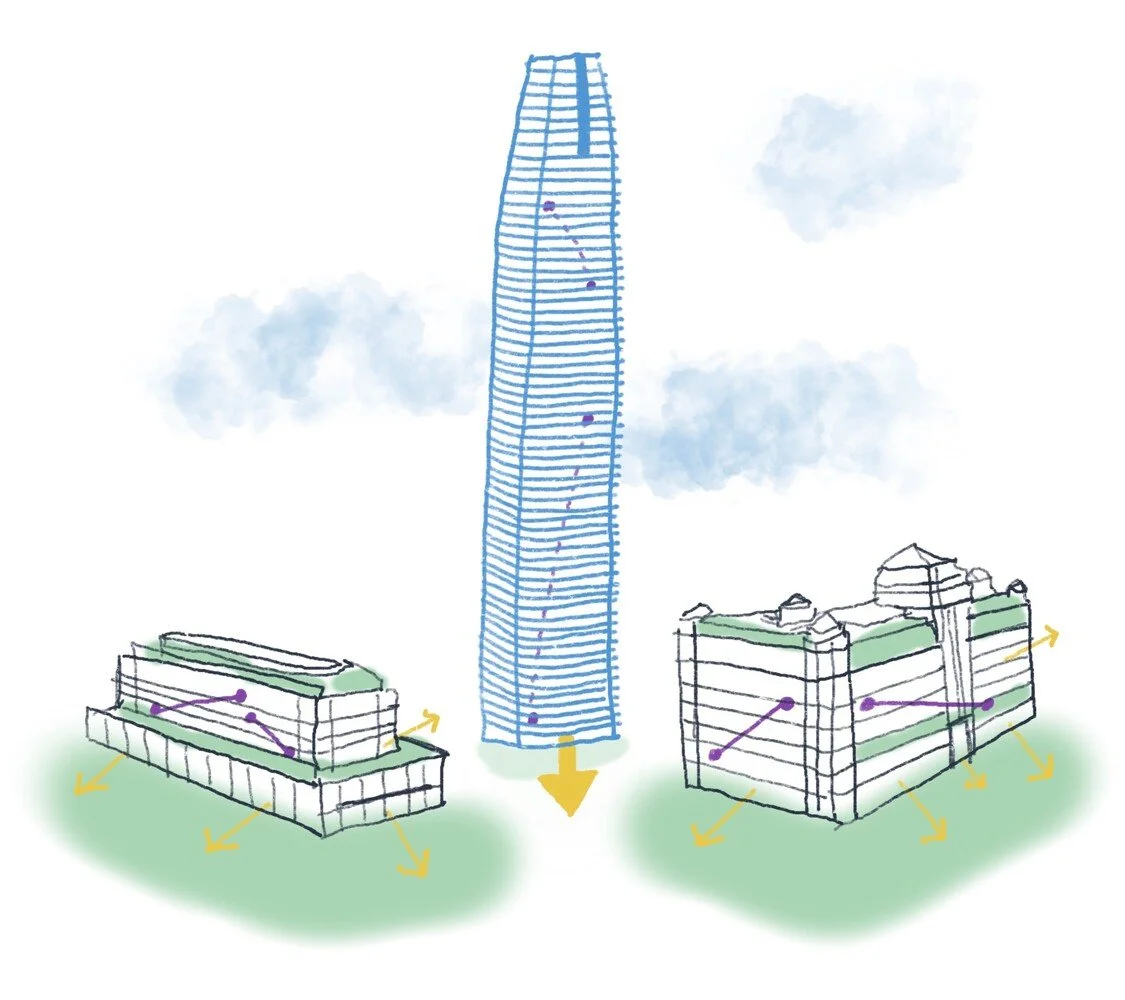
Advantages of "Groundscrapers" | Diagram by Brendan Gregory
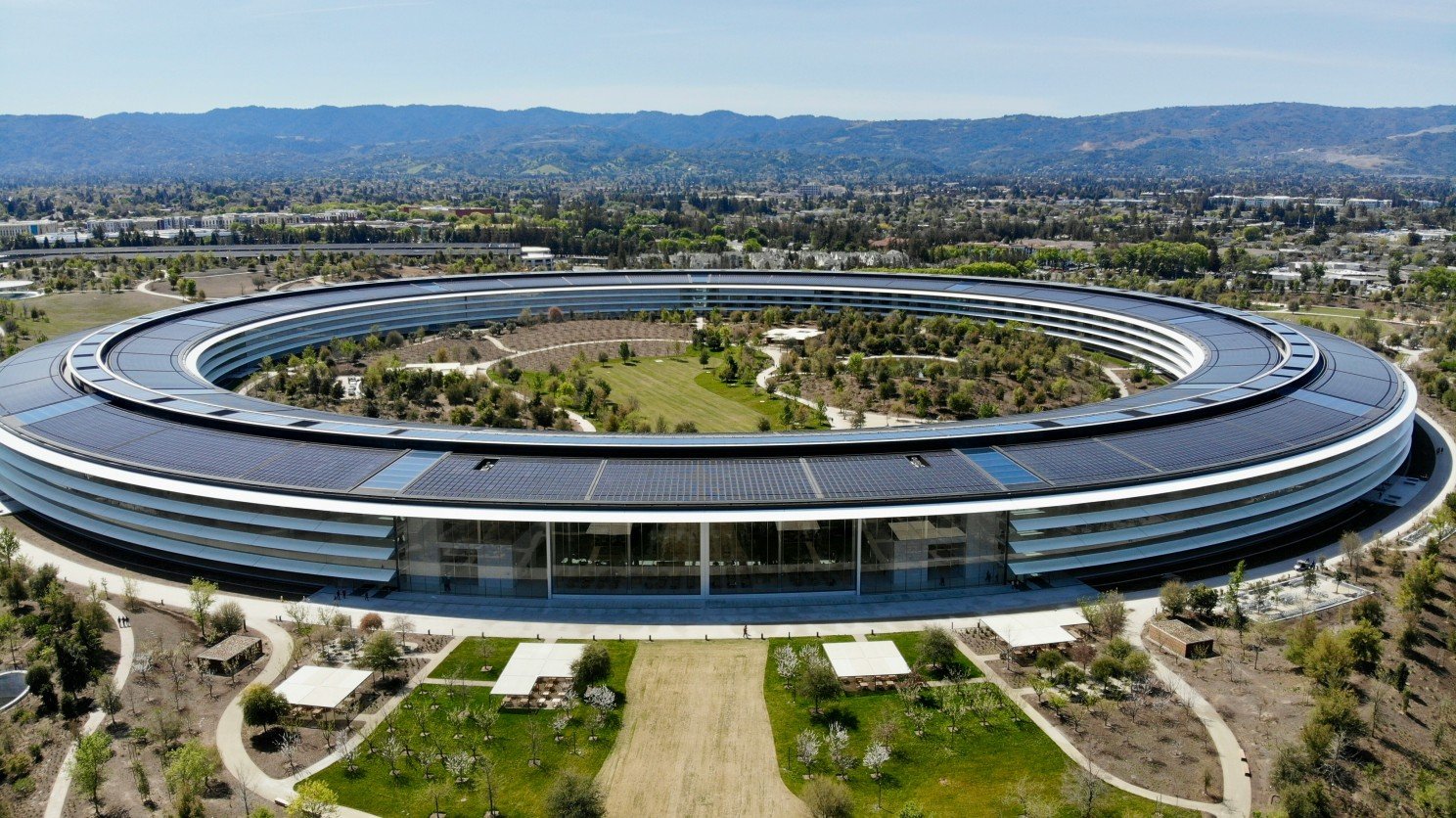
Apple Park (Cupertino, CA) | Image by Carles Rabada via Unsplash
Apple's new headquarters in Cupertino California, Apple Park, is another example of the "groundscaper" archetype in practice. Designed by Norman Foster + Partners, the circular four-story building houses more than 12,000 employees across over 2.8 million square feet of floor area. By burying the parking and making use of larger, more efficient floor-plates, the project provided for 60% more landscaped vegetation and 90% less surface parking on the site than the previous suburban office park it replaced. Apple orchards, open cafes + touch-down spaces, community amenities (focused around health + wellbeing), and serene reflecting ponds contribute to a healthier and more collaborative work environment.
As businesses increasingly prioritize fostering creativity & culture amongst their employees, more thoughtful entry/exit sequences from their workspaces, greater connectivity to nature, and lower overall workplace buildout costs, we are likely to see more "groundscraper" offices replacing traditional trophy tower high-rises. The shift towards more horizontal layouts aligns with many modern and emerging work trends such as greater adaptability for hybrid work environments, easier access to amenities, and fostering a stronger sense of community within the workspace. Land cost will always be a critical factor but with these benefits in mind, the future of office design + construction may be less about reaching for the sky and more about staying grounded.
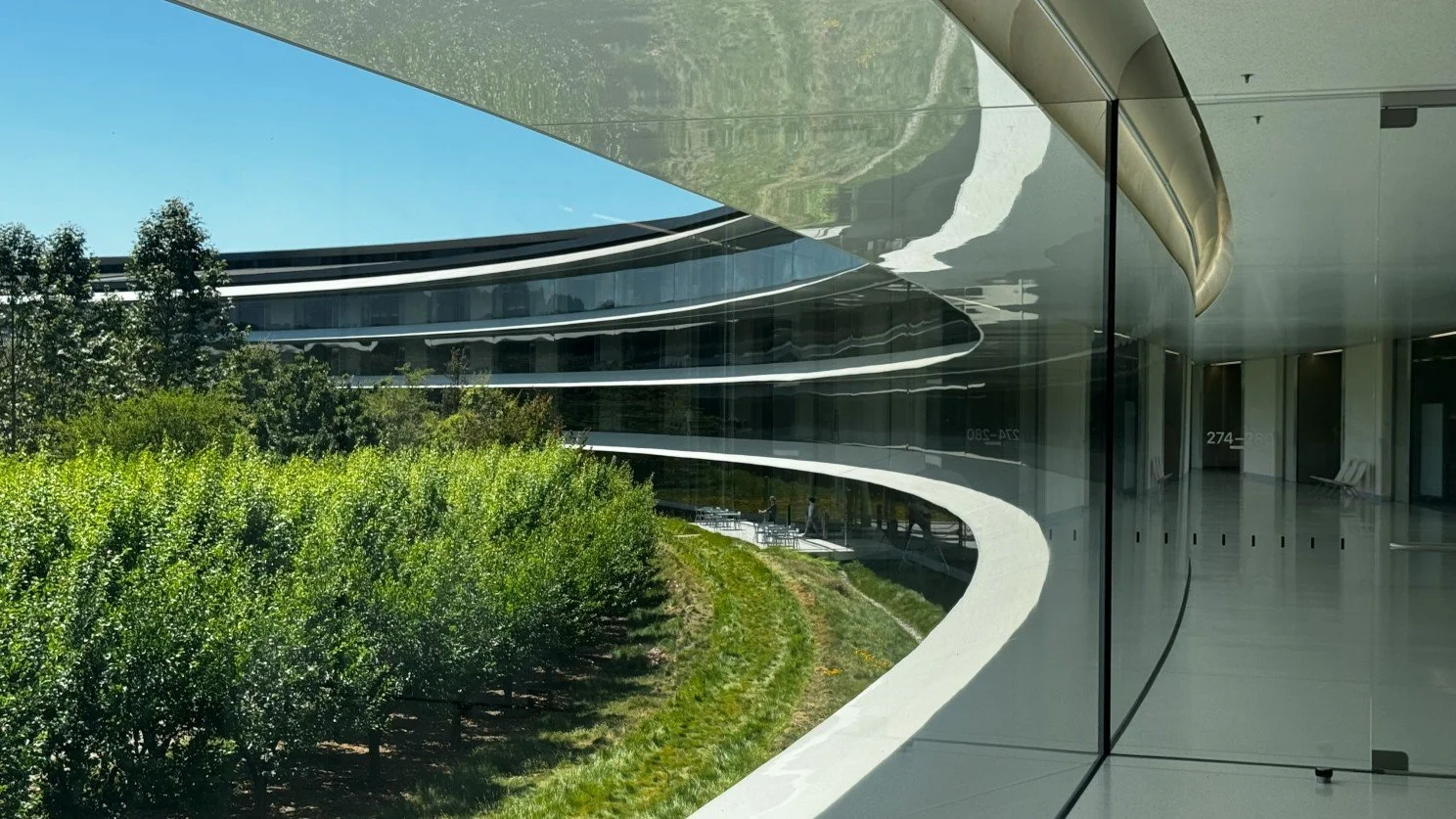
Apple Park (Cupertino, CA) | Image by Artem Horovenko via Unsplash
