
Third places are social environments distinct from the home (first place) and workplace (second place), serving as vital communal hubs that foster informal public life. Popularized by the urban sociologist Ray Oldenburg In his book titled The Great Good Place (1989), Oldenburg argued that third places are integral and vital for civil society, democracy, and civic engagement.
Some examples of third places include cafes, parks, libraries, markets, and community centers (among others), where people can gather, relax, and engage in conversation. These spaces foster a sense of community, offering a neutral ground for diverse groups to connect and interact. There are many historical examples of third places including the ancient Greek agora, open-air markets, ancient and contemporary houses of worship, Imperial Chinese Teahouses, and probably most ubiquitously the coffeeshop.
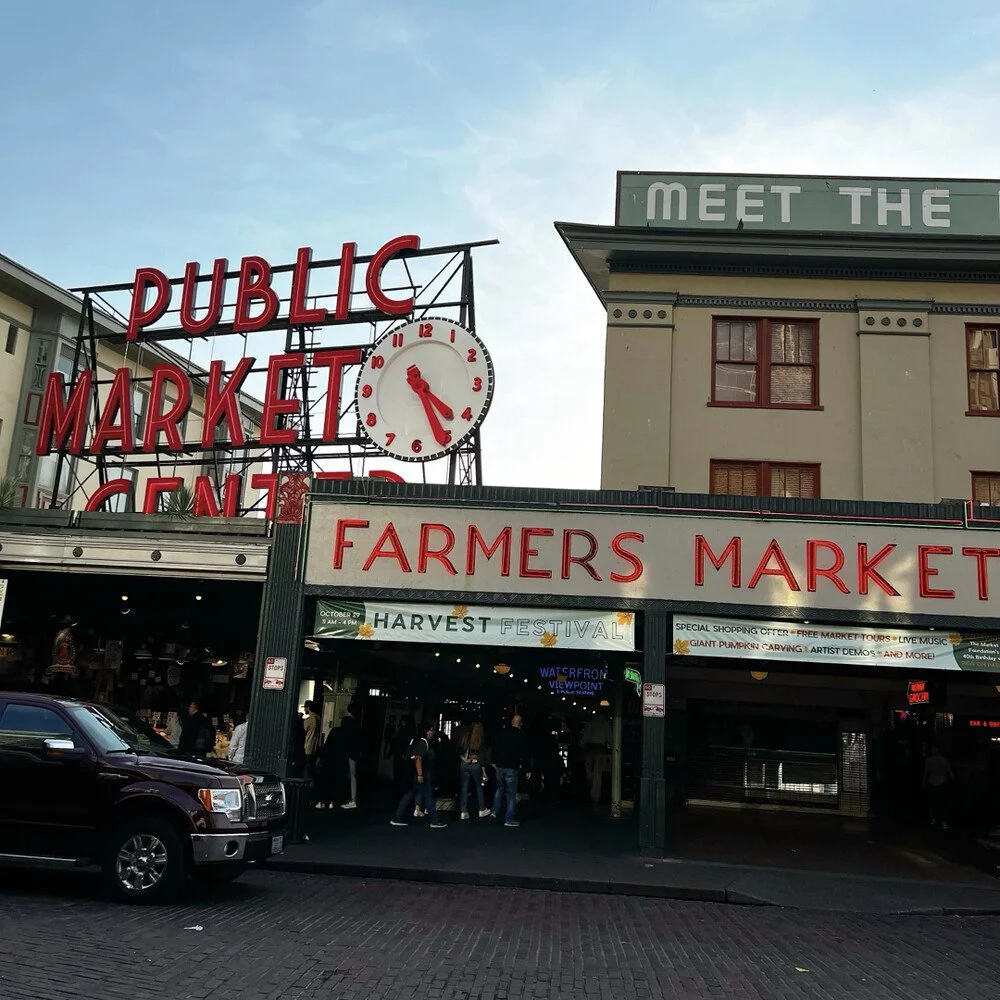
Pike Place Market (Seattle, WA) | Photo by Brendan Gregory
Third places promote social interaction and civic engagement, allow for the exchange of ideas, and help cultivate a sense of community and belonging. These spaces are typically characterized by open accessibility, a welcoming atmosphere, and a sense of playfulness, which helps contribute to the social fabric of neighborhoods and cities. Cozy seating, bold design, warm lighting, grenery, and conversation all help contribute to that atmosphere.
But third places as we know them are under attack and are quickly disappearing (Why are third places disappearing). Signs warning of no public restrooms, limits to wifi usage, roving security guards, and the post-pandemic shrinking of retail, restaurant, and coffeeshop footprints has changed the dynamic of our community third places. Ghost kitchens, self-service kiosks, and uber eats pickup stations have replaced what used to be space for people. This has left a craving and a desire to make our first places and second places more like the third places we yearn for.
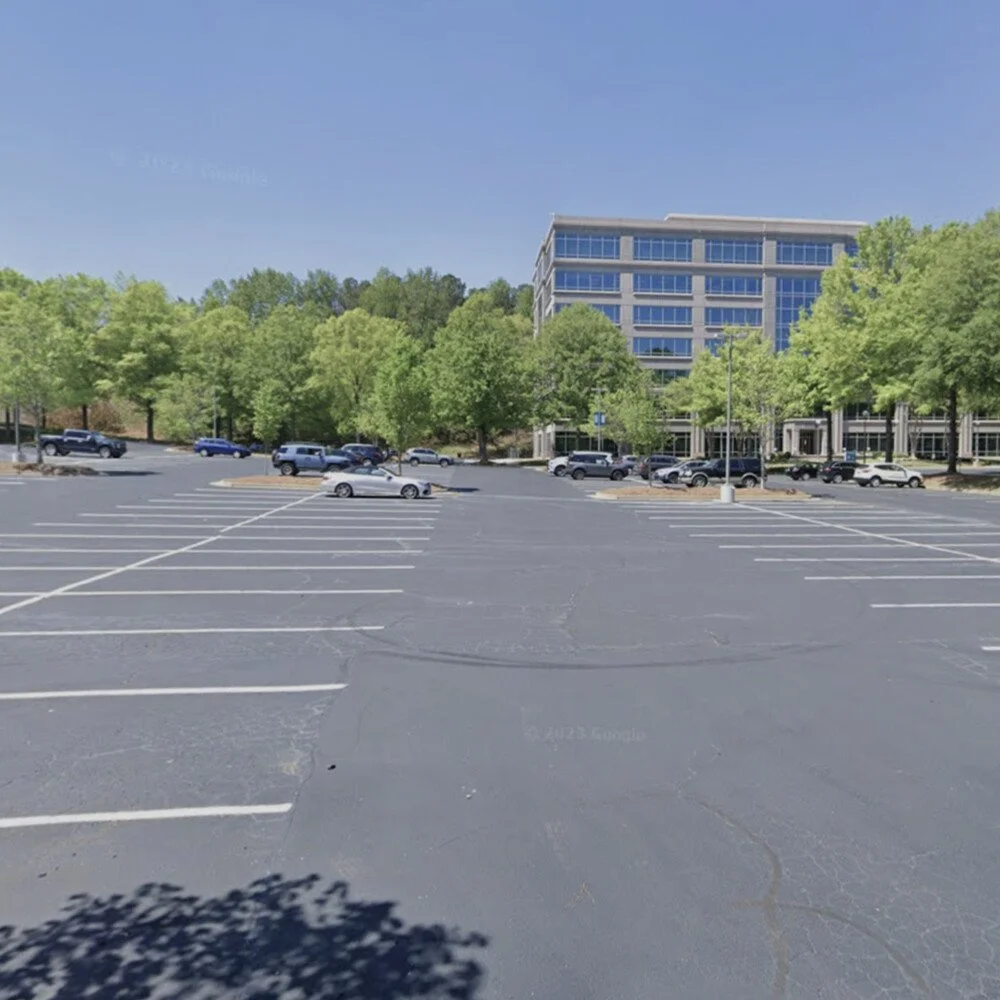
A very sad office (Atlanta, GA) | Photo from Google Maps
It's by no accident some of the best workplace environments are now seeking to replicate that disappearing "third place" atmosphere. Incorporating even just a few of the common third place elements can turn a building people dread trekking to into a welcome retreat. It's not hard to see what doesn't work, but what is working?
Accessibility & Convenience - The best workplaces are not relegated to the exurbs in isolated seas of asphalt and concrete. Colocate the office with walkable access to greenspace, F&B, entertainment, and other amenities to enhance the appeal.
Neutral Ground - Trade isolated executive offices and hierarchy for open workstations, equitable arrangements, and more open collaboration space. Office lockers can help ease that anxiety around where to place your favorite mug or picture of your cat.
Low Profile - "Luring" employees back into the office has become an arms race of sorts (CEOs are so desperate for a return to office that they’ll give employees who come back raises, promotions) but the best workplaces are warm, inviting, and understated much like your favorite coffeeshop or neighborhood watering hole.
Playfulness - Gravitate towards creating a light-hearted, playful atmosphere that encourages casual conversation and interaction. This can be accomplished through FF&E selection, greenery, and strategic pops of color or artwork installations.
Home Away from Home - The workplace should be a comfortable, welcoming atmosphere where people feel at ease and experience a sense of belonging.
Conversation - Conversation should be at the heart of the workplace to foster community and encourage serendipitous interaction. These unplanned moments can not only help with ideation and innovation but help to build stronger connections and relationships amongst the team. Balance noisier social spaces with phone booths, meeting pods, and quiet library-like focus spaces.
The next wave of great workplaces are more likely to mimic your favorite coffeeshop or town square than the brass fixtured, marble-clad, Madmen-esque corporate spaces of yesteryear and it's about time. Spoiler alert: if you make the workplace somewhere people actually want to be, they will go willingly and in numbers. Your new talent pipeline, employee retention rate, and workplace productivity levels will reward you as well.
See you at the water cooler happy hour at the rooftop sky terrace.
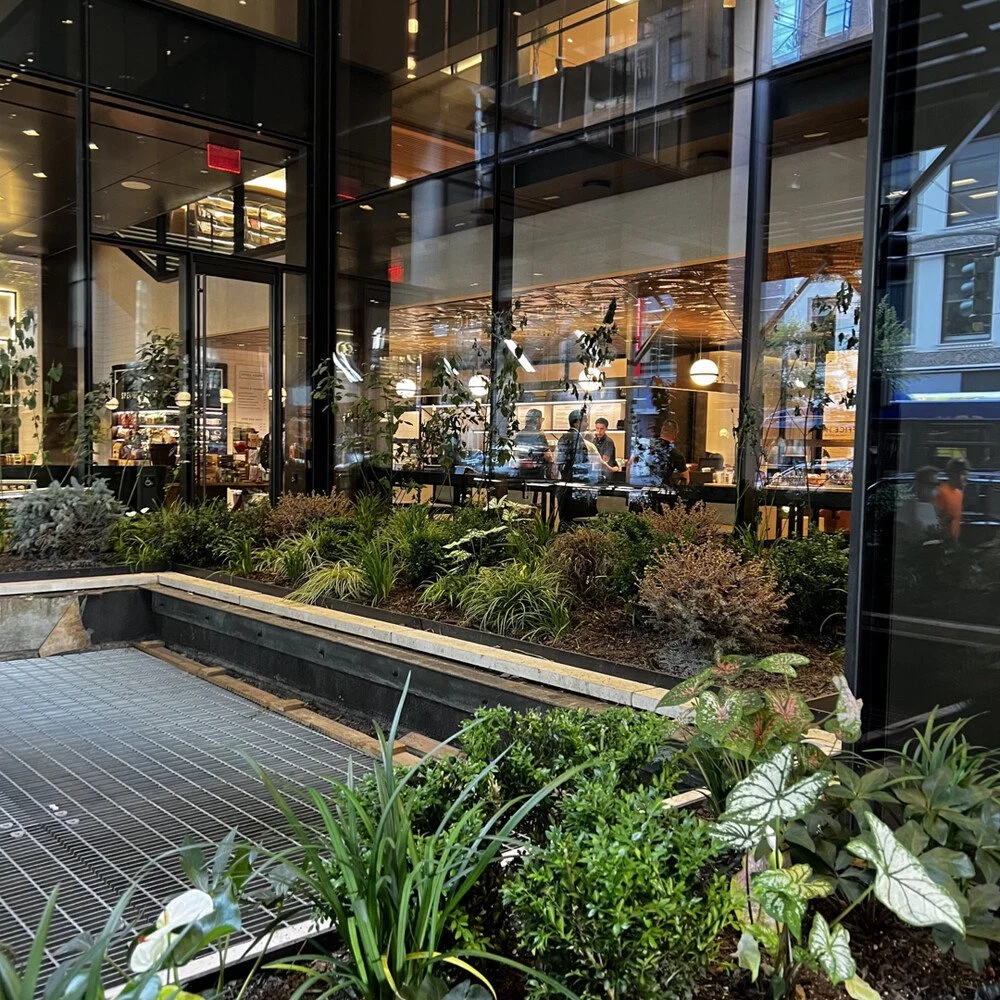
PENN 1 Offices (New York, NY) | Photo by Brendan Gregory
