
When companies share photos of their new office, you’ll usually see the same things:
Beautiful spaces. Great lighting. Designer furniture. Thoughtful design. But there’s one place you almost never see: The desks. The place where people historically spent most of their day is usually absent from the photos. Because if we’re being honest, the workstation floor often looks like… rows of identical desks.

Where are the desks? | Sketch by Brendan Gregory
This reminds me of touring new apartment buildings. The leasing agent proudly walks you through the trophy amenities:
The stunning rooftop pool
The state-of-the-art fitness center
The vibrant coworking lounge
The picturesque beer garden
The golf simulator
Everything looks amazing. Then you finally step into the actual apartment unit and notice: small windows, cheap appliances, "value engineered" finishes, no balcony, and constrained floor plans. The building invested heavily in the spaces you see for five minutes on the tour, not the space you actually live in. Offices tend to follow the same playbook.
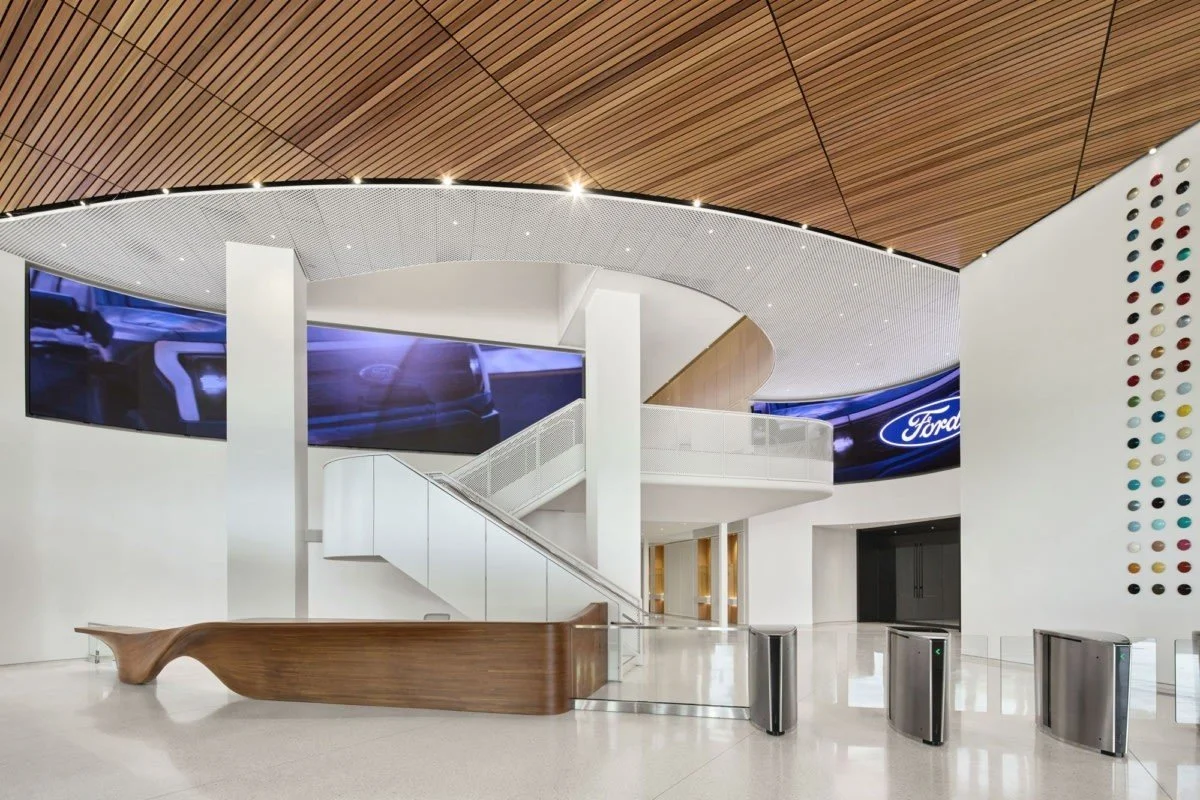
A pristine lobby at Ford World Headquarters (Dearborn, MI) | Design by Arcadis and Snøhetta, Photography by Garrett Rowland
But something has changed. The desk isn’t the center of work anymore. For decades, work required being tethered to a workstation: a desktop computer, a phone line, a stack of paper files, that cherished picture of your 3 year old cat and/or 3 year old son. Today most work runs on laptops, Wi-Fi, and cell phones which means work can happen almost anywhere. At a café table. In a lounge chair. In the lobby. On a patio. Even outside the office entirely.
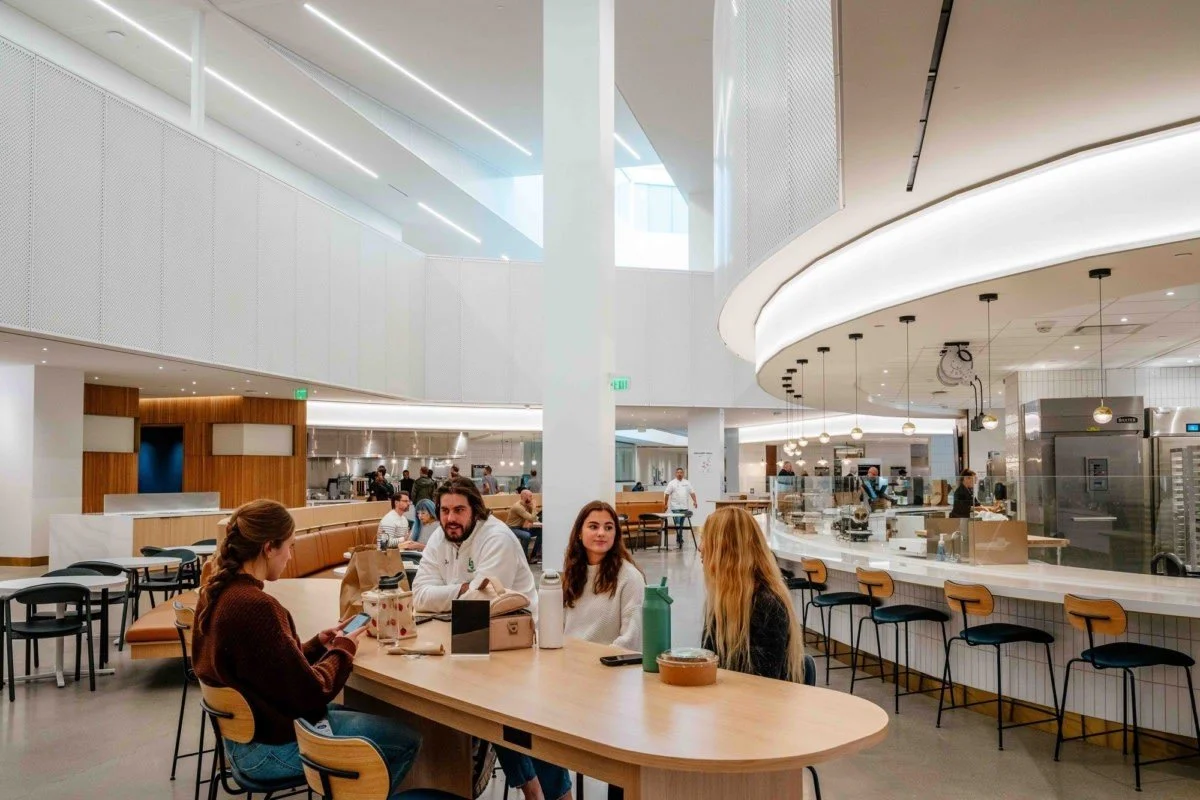
A buzzing cafe at Ford World Headquarters (Dearborn, MI) | Design by Arcadis and Snøhetta, Photography by Garrett Rowland
And that might explain why the “showroom spaces” have become the focus. The café isn’t just a perk anymore, it's where people actually work. The lobby isn’t just an entry point, it's a shared meeting place. The lounge isn’t just an amenity enjoyed at happy hour, it's an alternative work setting. In many modern offices, the spaces that look best in photos are also the spaces where work is actually happening.
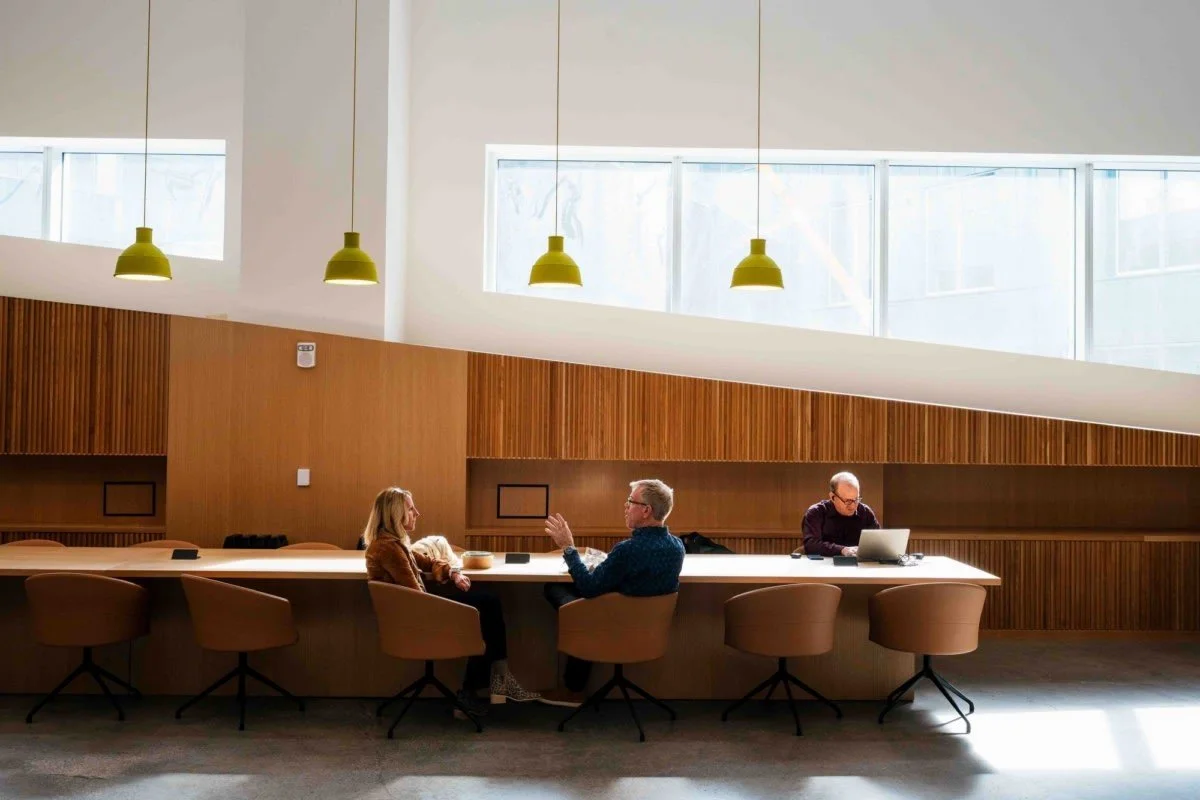
A tech-rich conference space at Ford World Headquarters (Dearborn, MI) | Design by Arcadis and Snøhetta, Photography by Garrett Rowland
Which raises an interesting question: If work is no longer tethered to a desk…what exactly is the desk for? Maybe the workstation is becoming less like a permanent seat and more like a home base. A place you return to between meetings, calls, and conversations happening elsewhere in the office (hello middle school locker). The real work environment might not be a desk anymore, it might be the entire building.
So maybe the reason we don’t see photos of workstations anymore isn’t just because they’re boring. It’s because the center of gravity of work has shifted. Offices used to be designed around desks but now they’re increasingly designed around places people want to spend time (and that might actually be progress). Offices are taking on the form of our favorite coffee shops, hotels + resorts, and neighborhood watering holes. Why? The seat you are expected to spend eight hours a day in shouldn’t be the least designed space in the building.
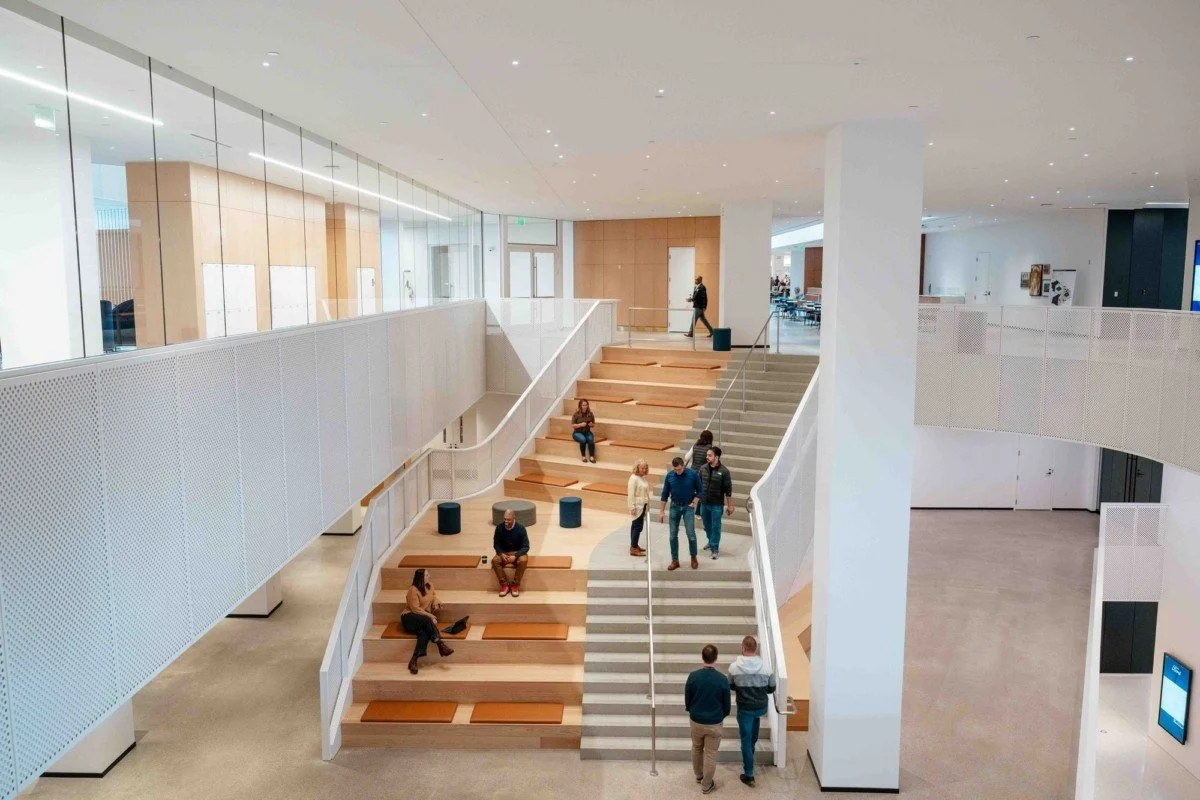
The monumental staircase at Ford World Headquarters (Dearborn, MI) | Design by Arcadis and Snøhetta, Photography by Garrett Rowland
