
I just got back from a weekend cruise.
Cruises can be polarizing and I'll be the first to acknowledge they're not for everyone. Visions of endless serpentine lines, hordes of screaming unaccompanied children, long wait times for food and drinks, and a cavernous yet confined vessel on dark, open water. But cruises in 2026 are not your grandma's sleepy vacation and among a crowded pool of competitors, there's no denying this: Royal Caribbean is exceptionally good at what they do. You need not look further than their most recent earnings call where the cruise line beat on nearly every single metric (bookings, profit, earnings per share, etc.) sending the stock up nearly 15%, capping off over +30% in stock gains over the past calendar year. Perhaps most impressively, RCL touted nearly 2/3 of 2026 total capacity is already spoken for. This has other cruise lines rushing to catch up with the (similarly designed) next largest ship in the world or open the next award winning cruise vacation destination.
Workplace strategists and designers talk endlessly about “hospitality in the workplace,” yet most offices still feel like they were designed and managed by people who have never experienced real hospitality. Meanwhile, vacation brands have quietly solved something workplaces are still struggling with: getting people to actually want to show up. If a vacation can convince you to drop some serious cash and cross multiple time zones for a day in the sun, why can’t your job convince you to travel 20 measly miles for a workday?
Vacations Solve Problems Offices Keep Ignoring
On vacation, you get:
A mix of environments depending on your mood—quiet, social, energetic, restorative
Zero commute stress (everything is handled for you)
Multiple food & beverage options that feel intentional, not transactional
An experience that feels curated from arrival to departure (highlighted by exceptional staff)
In the office? We’re still congratulating ourselves for free stale coffee and a ping-pong table.
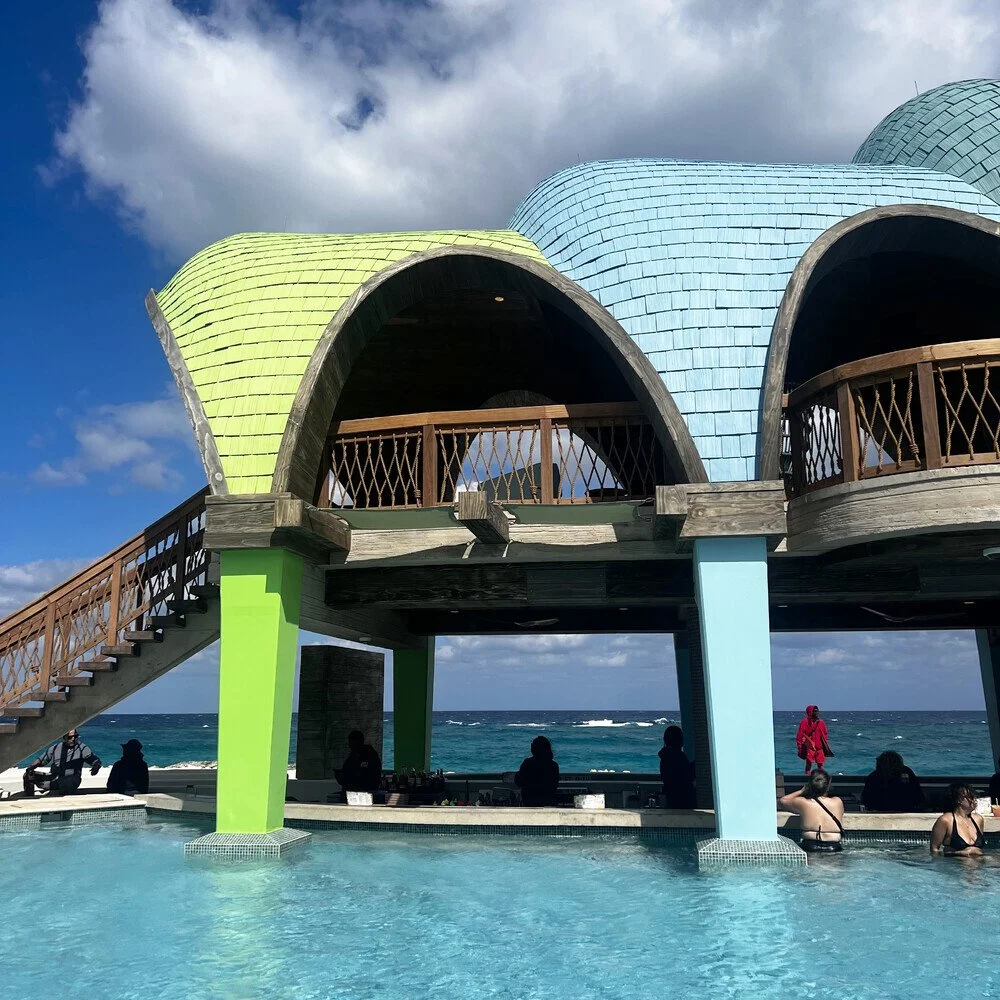
Mix of Environments
Royal Caribbean assumes something radical: all people are not the same all day. To facilitate this, their environments both on and off the ship flex accordingly — serene lounges, buzzing social decks, high-energy activity zones, and genuinely restorative "chill" spaces. Offices, meanwhile, often commit to a single spatial ideology and force everyone into it. Open plan, assigned desk, glass conference rooms. Pack your sack lunch, drive your 35+ minute hellish commute, and pick one environment to be stuck in regardless of whether you’re heads-down, burned out, or craving human connection. Royal Caribbean's ships and destinations are designed around human variability (via subtle changes to furniture, material selections, and even music + art curation); offices are designed around pure furniture efficiency.
Vibrant "Party Cove" at Royal Beach Club Paradise Island (Nassau) | Image by Brendan Gregory
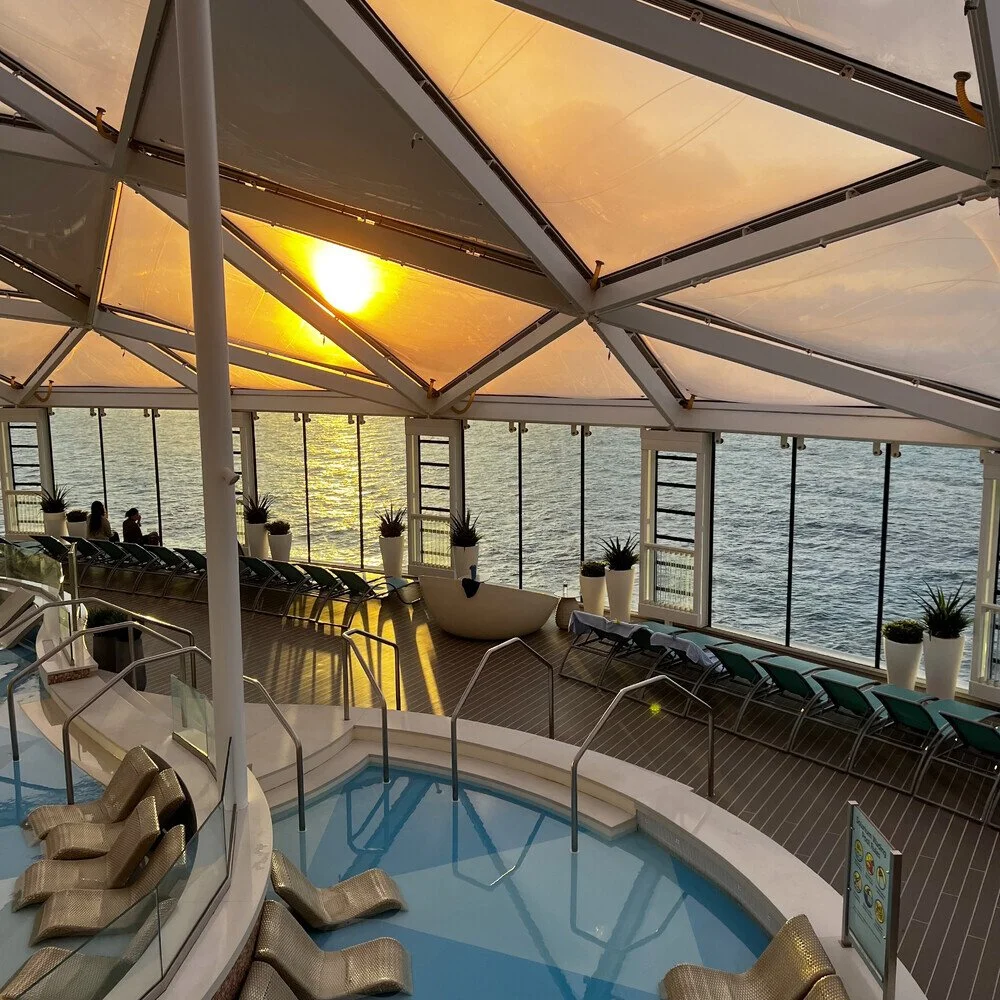
Zero Commute Stress
On a cruise, the most logistically stressful part of your day (getting from place to place) is invisible. Once onboard, you don’t think about traffic, parking, weather, or transfers. Movement is smooth, intuitive, and largely pleasant and your hotel room comes with you everywhere you go. Offices do the opposite: they offload all friction onto the individual and then "act surprised" when people arrive depleted or resist coming in at all. An hour in traffic followed by a badge swipe and a desk assignment (assuming you can find a desk) is not a neutral precondition — it’s a tax on energy before the "work" of work even begins. On the seas the hardest choice is deciding where to take in the nightly sunset and whether you can grab a drink at "Central Park" between sunset and your dinner reservations.
Solarium sunset onboard Utopia of the Seas | Image by Brendan Gregory
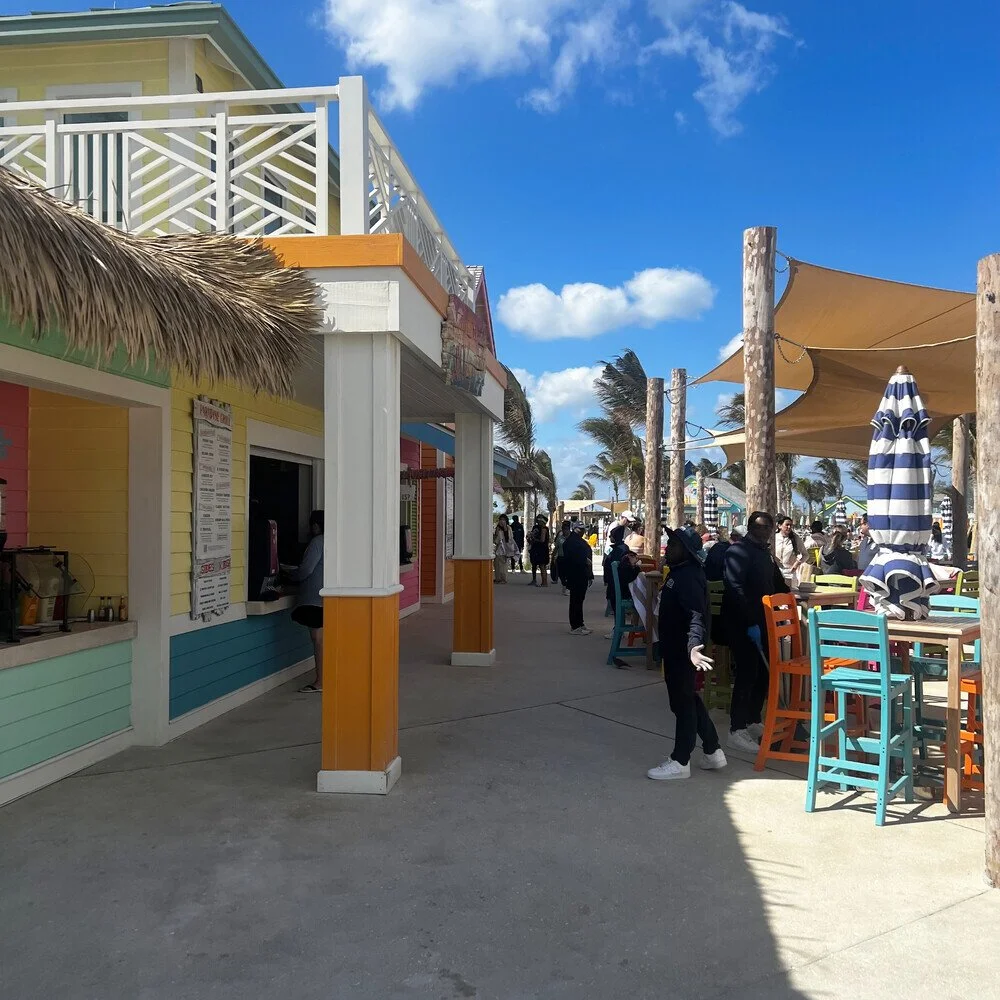
Food and Beverage Options
On a Royal Caribbean ship or branded vacation destination, food isn’t an afterthought or a fuel stop; it’s a designed experience. You choose based on mood, timing, and desire: quick coffee, lingering breakfast, social dinner, late-night snack. Even the menu tells a story: items like Fire Engine Fritters and Bahamian-Style Mac & Cheese root the experience in local culture rather than generic resort fare — responsive to early guest feedback at the newly opened Royal Beach Club at Paradise Island (Nassau), the team expanded the menu offerings from 18 to 33 items, adding more gluten-free and health-forward options along with a dedicated kids menu. Contrast that with the average office, where food is either a sad kitchenette relic or a single subsidized cafeteria optimized for throughput, not delight. One option, one line, one fluorescent-lit room that says “eat fast and get back to the machine of work.” Hospitality understands that nourishment is emotional + social as much as functional; offices still treat it like a compliance item.
Paradise Grill at Royal Beach Club Paradise Island (Nassau) | Image by Brendan Gregory
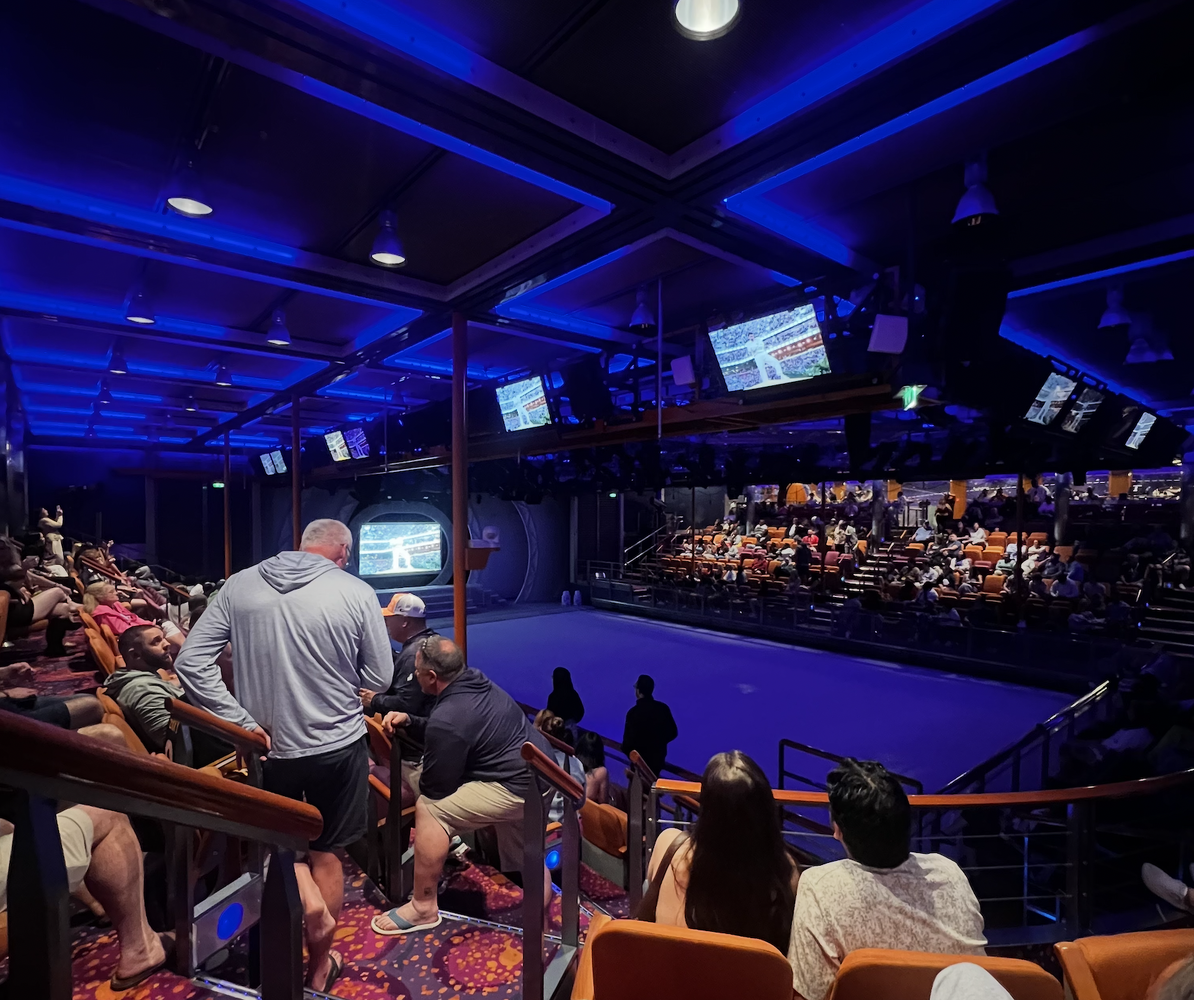
A Curated Experience (characterized by exceptional staff)
The most striking difference is intentionality. On a Royal Caribbean ship or destination, every touchpoint — lighting, signage, acoustics, artwork, sequencing of spaces — signals that someone mapped the full journey and cared about how it feels. The design/build teams mock up full size prototypes in the Miami HQ and run through the full experience from the guest's lens in the 'Innovation Lab.' In many offices, you can practically see the organizational handoffs: real estate chose the building, design chose the furniture, IT chose the setup, facilities manages the ongoing maintenance, HR chose the policy. No single owner of the experience, just a collection of decisions (and people feel that difference immediately). This intentionality permeates the culture and is the exact reason why it may be difficult to compel coworkers to gather in the breakroom for Martha-From-Accounting's Birthday, but not so difficult to pull several hundred people together from varying places and backgrounds to gather and watch the Super Bowl Halftime Show in the middle of The Atlantic Ocean (Lo siento Martha).
Superbowl Halftime Show at Sea | Image by Brendan Gregory
Royal Caribbean Gets What Offices Forget
Whether at a branded vacation destination like the newly christened Royal Beach Club at Paradise Island (Nassau) or onboard the ships themselves, Royal Caribbean doesn't design one space and hope it works for everyone. They design ecosystems or what they commonly refer to as "neighborhoods". This means a space for every person and every occasion; quiet venues for relaxing juxtaposed with lively social zones, family-friendly areas and places to foster respite and wellness. An "entry level" accessible experience and an elevated one for the more discerning traveler who is willing to pay a bit extra.
Post-pandemic surveys consistently show that 60–70% of employees want flexibility, yet many offices still optimize for assigned desks and traditional layouts over choice. With attendance optional (or varying degrees of optional) and talent holding much of the leverage, the office can’t just be functional anymore. It has to have all the features of your favorite vacation destination: Hospitable, Varied, Easy, Human.
Not every office needs a beach club. But every office should make people think:
“Yeah… I’d actually choose this today.”
Hospitality brands invest millions to attract people who don’t have to be there. Offices struggle to attract people who are paid to be.
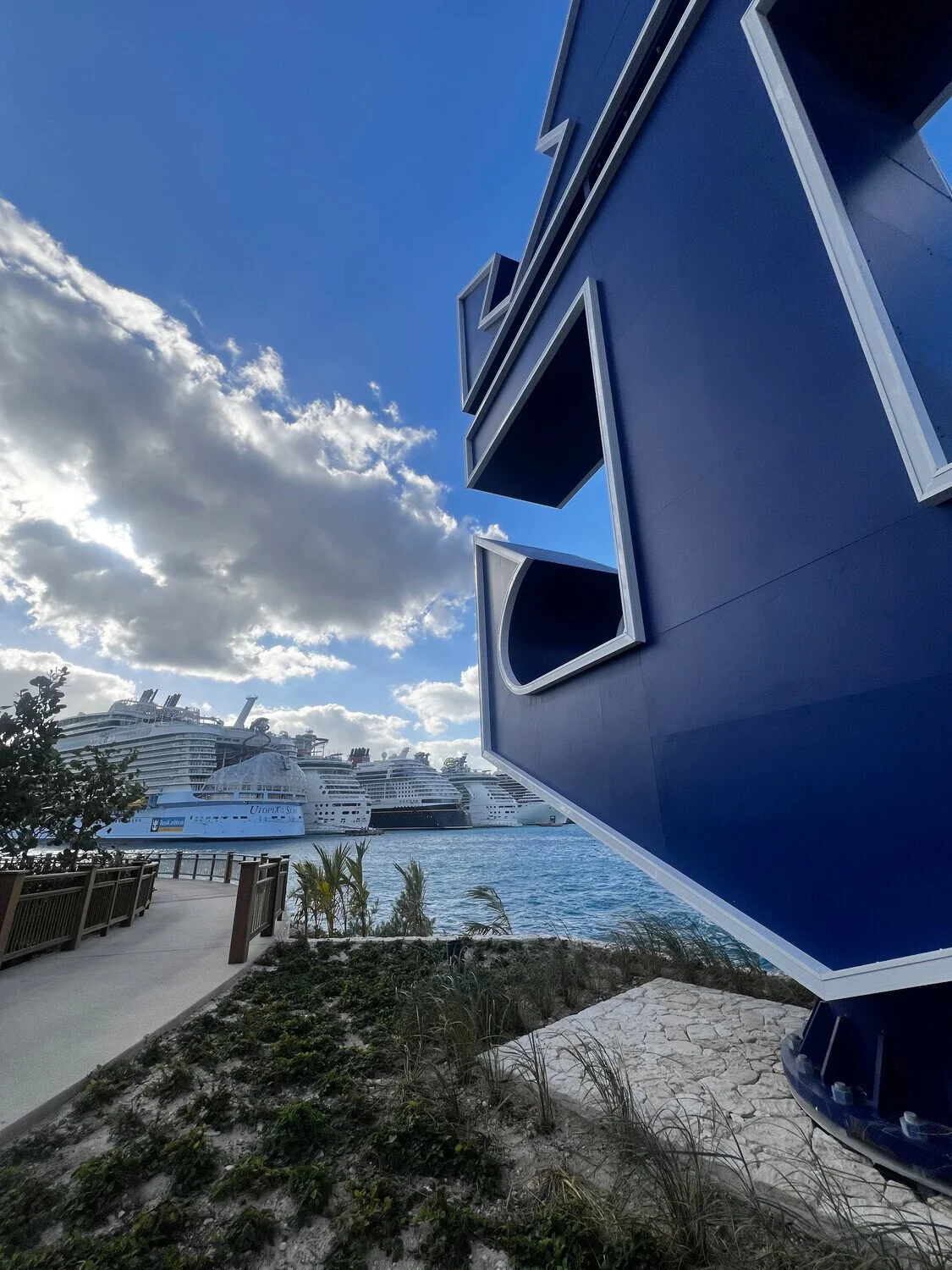
More Offices at Sea? | Image by Brendan Gregory
