
Last week I visited Los Angeles for the first time. I hit the highlights: The Santa Monica Pier, LACMA's new Peter Zumthor designed David Geffen Galleries, Hollywood, WeHo, DTLA, and more. One highlight stood out from the trip, though, that I wasn't expecting: the mystique of the luxury grocery store. I visited several Erewhon outposts and another newly opened, even more over-the-top luxury grocery store called Laurel Supply.
And yes, the stereotypes were real:
$20 vibrantly colored smoothies
$30 packaged caesar salads
picture perfect stacked fresh produce
prepackaged provisions in glass jars
an artisanal wood-fired pizza oven
enough neutral-toned tote bags to destabilize the global linen market
But what surprised me wasn’t the pricing. It was how packed these places were.
People weren’t rushing in and out buying groceries. They were lingering. They were sitting on patios, taking photos, socializing, working on laptops, experiencing the space. And honestly, the design was doing a lot of the heavy lifting.
Laurel Supply occupied this beautifully rehabbed mid-century building with natural wood, soft daylight, wide open doors + windows opening to patios, fresh air moving through the building, warm plaster walls, hand-painted signage, carefully merchandised shelves. Even the butcher counter—normally one of the most utilitarian spaces imaginable—felt elevated. Suddenly a slice of pizza didn’t feel transactional, it felt curated.
Which got me thinking about offices.
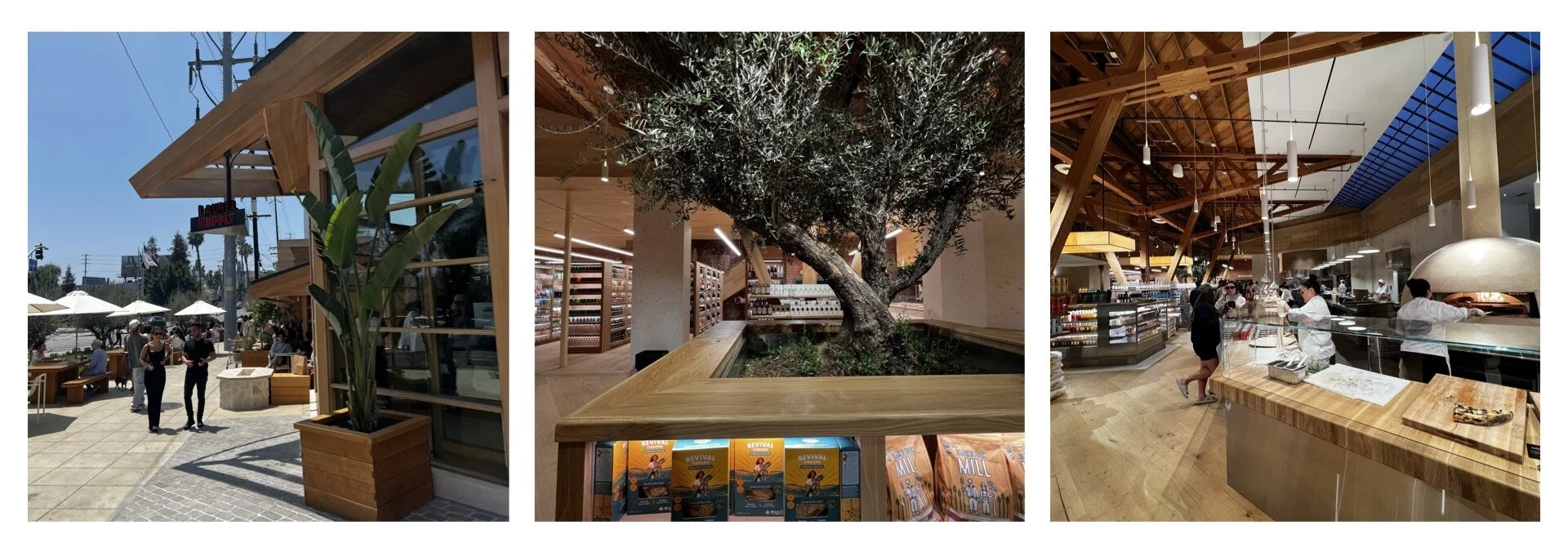
Laurel Supply off Santa Monica Blvd. in West Hollywood, CA | Images by Brendan Gregory
People will drive across town and wait in line for a $20 neon fruitsmoothie in a beautiful environment—yet many of those same people would rather work from their kitchen table than spend eight hours in their office. Some of those same people were even knocking out some work from the grocery store itself. That’s a problem; because the office isn’t just competing with just other offices anymore. The office is competing against hospitality, retail, cafés, wellness spaces, clubs, and restaurants (plus yes, even bougie grocery stores).
Luxury grocery stores understand something many workplaces still don’t: people gravitate toward environments that make them feel something. And increasingly, those expectations are bleeding into the workplace (thankfully). Some pointers:
Sensory Environment | Luxury grocery stores are carefully tuned sensory experiences: fresh scents, curated playlists, warm lighting, natural materials, fresh air. Meanwhile many offices still default to stale carpet, harsh fluorescents, and acoustics that somehow amplify every Teams call in the building.
Aesthetics & Arrangement | At Laurel Supply, even stacked fruit felt intentional. The shelving, signage, and presentation elevated ordinary products into something aspirational. Offices aren’t that different. The exact same workplace can feel dramatically different depending on materiality, furniture quality, layout, and daylight.
Food & Amenities | Luxury grocery stores understand that food is part of the experience, not an afterthought. Meanwhile many offices still treat hospitality as a vending machine hidden next to a microwave no one cleans.
Indoor-Outdoor Flow | One of the most compelling parts of Laurel Supply was how open it felt: garage doors opening to patios, natural ventilation, daylight pouring inside. Meanwhile many offices still feel hermetically sealed from the outside world. Humans weren’t designed to spend 9 hours inside a drywall box with no operable windows sitting within a sea of inhospitable asphalt.
Design for Engagement | People were taking photos, lingering, socializing, working on laptops, and spending time at Laurel Supply without being told to. That’s the difference between a place optimized for engagement versus a place people are actively trying to escape by 5pm (or earlier).
Personal Agency | Technically, grocery shopping could be fully automated. Most of us could have groceries delivered forever. But people still like walking the aisles, picking produce, discovering things unexpectedly, and controlling the experience themselves. Work is no different. People don’t just want flexibility; they want agency over how, where, and in what environments they work.
Sure, not every office can (or should) have $20 smoothies or $30 salads, but people have increasingly become accustomed to environments that feel intentional, sensory-rich, and human-centered. The environments people voluntarily spend money, time, and attention in are designed for humans, not just efficiency. The office should probably take the hint.
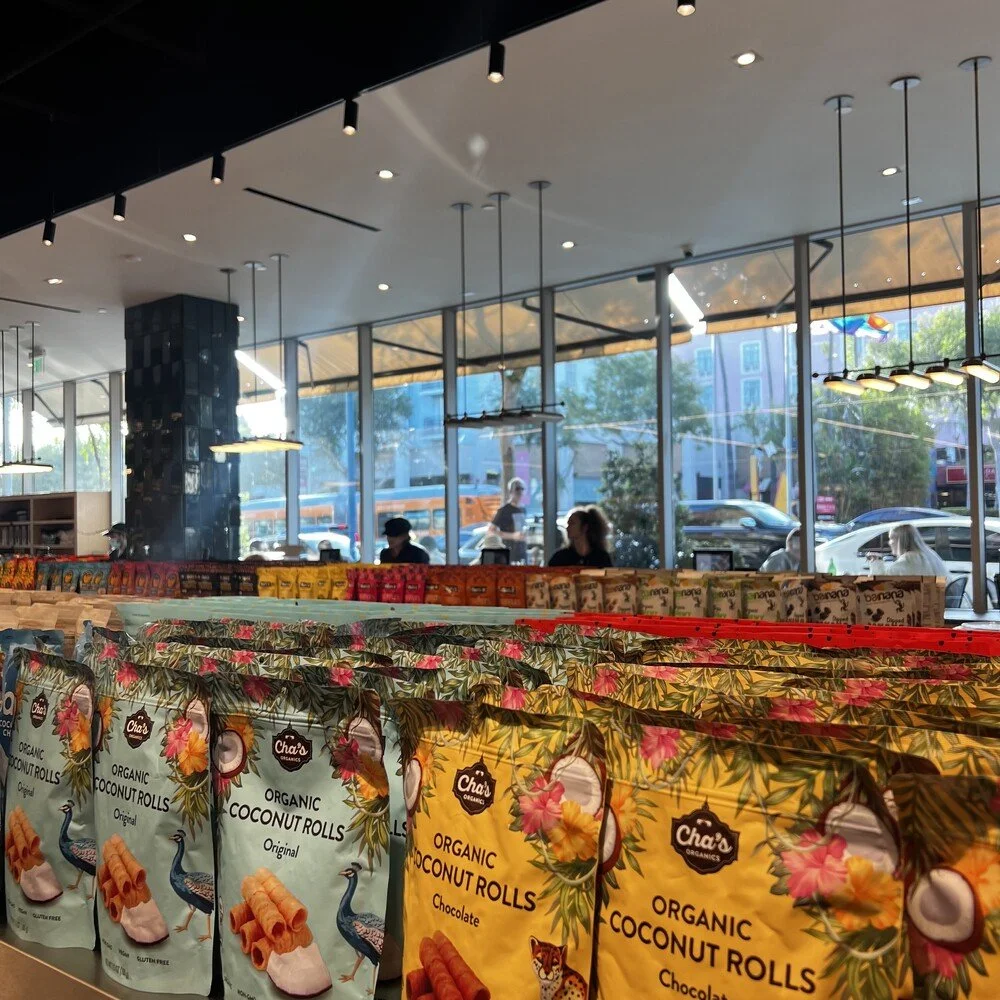
Sunbathed organic coconut rolls at Erewhon (yum) | Image by Brendan Gregory
