
micro.cosm
Shared reality, hospitality, and the business of getting people to leave home.
Monday I had what felt like a once-in-a-lifetime experience: I watched Germany square up against Paraguay in the knockout round of the 2026 FIFA World Cup. It was David vs. Goliath and had all of the regular time and overtime action I could have hoped for (including PK's).
The funny thing is, I wasn’t actually at the World Cup. The match was being played over 1,000 miles away in Foxborough, Massachusetts, while I was in Downtown Atlanta, inside Cosm, watching it unfold across an 87-foot immersive screen. Around me was an electric room full of strangers who had all made the same choice: to leave the couch and experience the game together.
The more I've thought about that decision, the more interesting it becomes.
We live in an era where almost anything can be delivered, streamed, downloaded, or experienced from home. That should have made physical places less relevant. Instead, it seems to have made the best ones even more valuable.
Spaces like Cosm are opening across the country. The best restaurants still have waiting lists. Coffee shops are full, even though everyone has coffee at home. Rather than competing on access, physical places now compete on experience. And what an experience it was from the Shared Reality, great Hospitality, and even the Participation the venue offered on this random Monday afternoon. Today, a place doesn't simply have to exist—it has to offer an experience compelling enough to justify the trip.
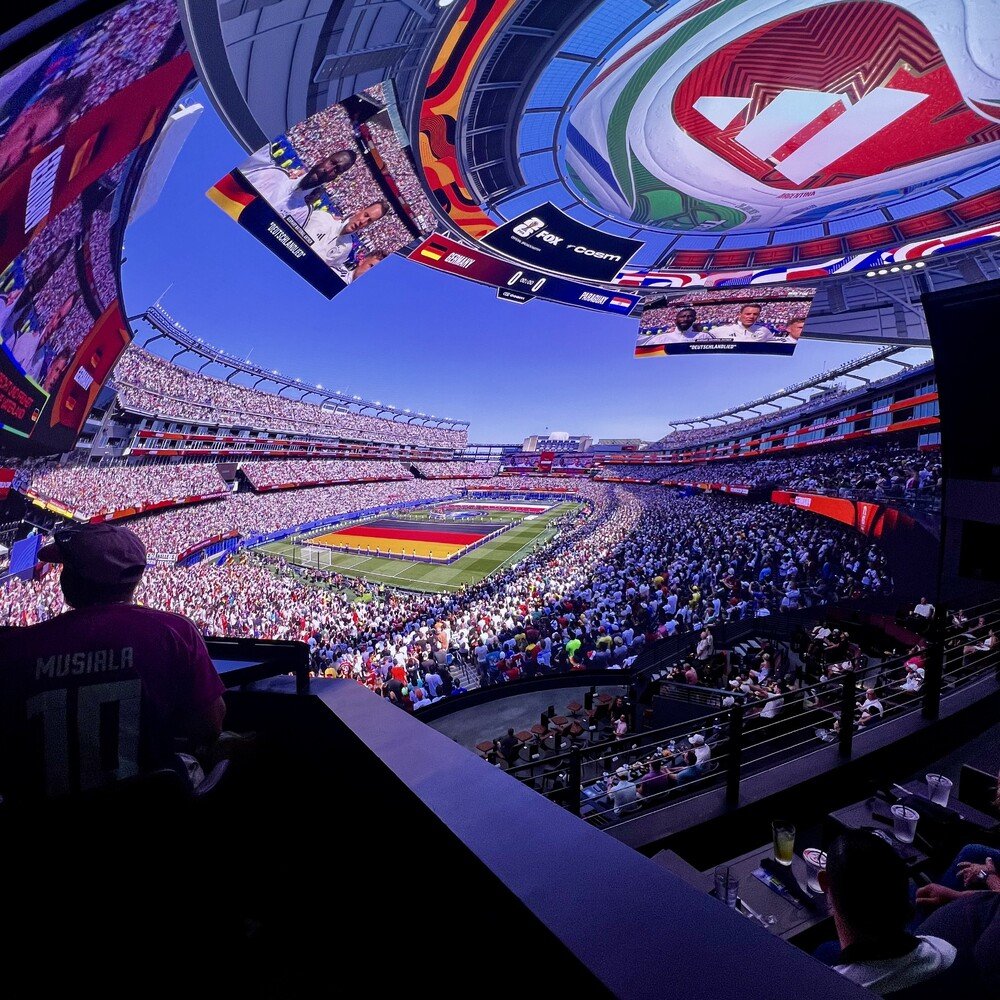
My Cosm pitch-side seats | Image by Brendan Gregory
Shared Reality
What fascinates me about Cosm is that it doesn't market itself as a better screen. It calls its product "Shared Reality." That's a subtle but important distinction: the technology is impressive, but I don't think the technology is the product. The product is the feeling of experiencing something alongside hundreds of other people.
The match itself was available on television. The score would have been exactly the same from my couch. What I couldn't get at home was the collective anticipation, the crowd reaction, the groans, the cheers; the sense that, for a couple of hours, a room full of strangers was sharing the same emotional timeline. That, more than the size of the screen or the fidelity of the image is what people are paying for.
Hospitality
It also made me realize that hospitality plays a much larger role in the experience than we often give it credit for. Imagine the exact same broadcast projected onto a wall in a fluorescent-lit warehouse with metal folding chairs and a dusty vending machine. Yet again, technically nothing about the game has changed but almost everything about the experience has.
The rooftop patio overlooking the Atlanta skyline, the abundant food and drinks, the premium "pitch-side" service, the movement between spaces, the anticipation before kickoff, and the conversations afterward aren't individually amenities, they're part of the product. Hospitality isn't what happens around the event; increasingly, it is the event and that reason to leave the couch.
Participation
The more I experienced Cosm firsthand, the more another detail stood out. It isn't designed around a single "best" way to experience the match. Some guests choose seats in the immersive Dome. Others prefer the wide open Hall, a more traditional viewing environment with tables and booths pointed towards a wall of TV's playing a multitude of games and events (think a more traditional sports bar). Still others purchase general admission ticket and drift between spaces, spending as much time socializing as they do watching the game.
It struck me that the venue isn't really organized around technology at all. It's organized around different levels of participation. Sometimes we want to be immersed in the middle of the action. Sometimes we prefer to observe from the edges. Sometimes we simply want to drift between conversations, people, and places. Great destinations don't prescribe one way to participate they offer a spectrum of experiences and let the people choose.
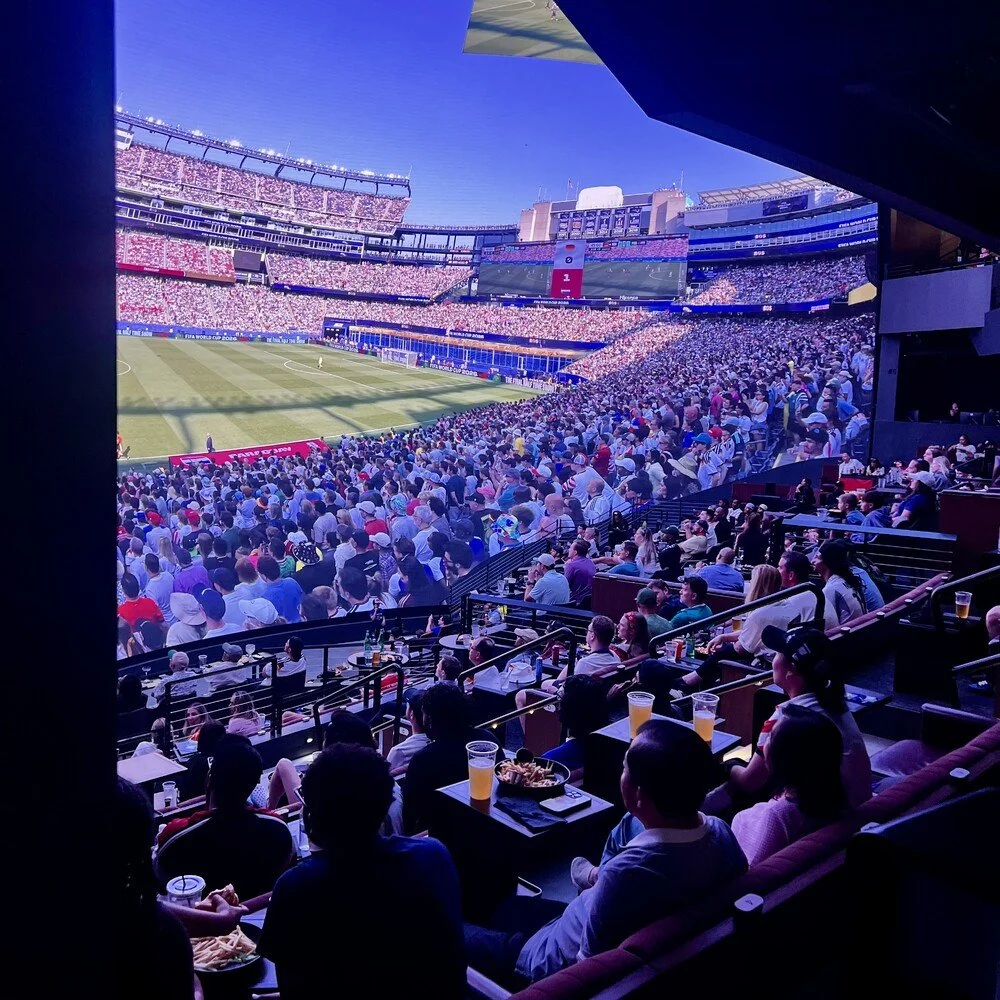
The lower level of the immersive Dome | Image by Brendan Gregory
A Broader Pattern
Cosm isn't unique. It's an unusually clear example of something happening across almost every kind of physical place.
Hotels are becoming coworking spaces. Retail stores are becoming destinations. Sports venues are becoming entertainment districts. Coffee shops have quietly become offices. Museums increasingly host lectures, happy hours, and community events. Increasingly, the places where we gather are borrowing from one another because they're all trying to answer the same question: how do you create a place worth visiting when people no longer have to visit (traditional entertainment has taken notice)?
Workplaces are no exception. For the past several years, we've framed the return-to-office conversation around productivity. Can people do their work from home? In many cases, they can. But productivity alone doesn't explain why people willingly leave home for a restaurant, a concert, or an afternoon at Cosm.
I don't think I left Cosm thinking about an 87-foot immersive screen.
I left thinking about places.
What made the afternoon memorable wasn't the broadcast itself. Millions of people watched the same match. What made it memorable was how intentionally the experience had been designed around it: shared reality, hospitality, and the freedom to participate in different ways.
Those three ideas may have broader implications than one World Cup match. Whether we're designing a workplace, a hotel, a restaurant, a retail store, or an entertainment venue, the challenge increasingly feels the same. The most compelling places won't simply provide a function. They'll create experiences people genuinely choose to be part of.
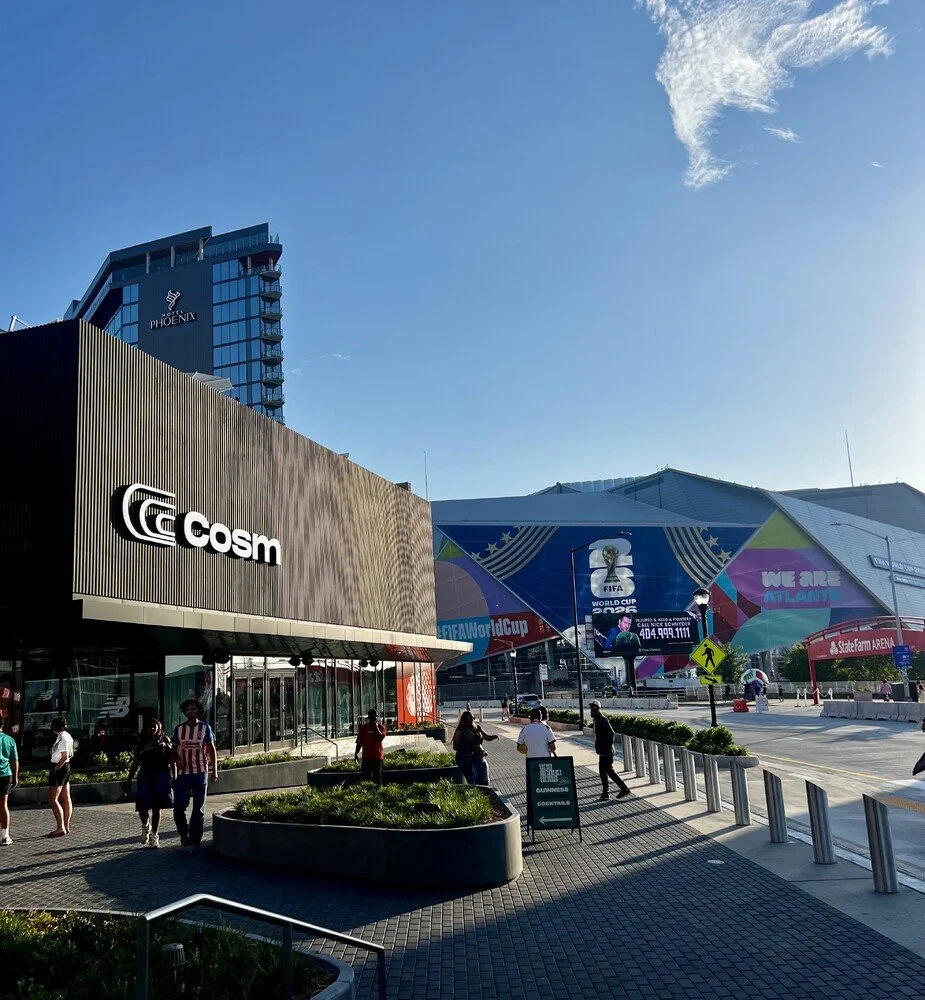
The venue in the shadow of Atlanta's Mercedes Benz Stadium | Image by Brendan Gregory
