
American urban planner, author, and theorist Kevin Lynch spent the better part of his career studying complex concepts related to the perceptual form of urban environments, particularly the layered concept of "mental mapping." In his 1960 book, The Image of the City, Lynch argues that a city’s “imageability” (how easily its layout can be understood and remembered) shapes how people experience it. This, in turn, can help to inform and predict the future success + growth trajectory of a given place (or sometimes lack thereof).
Lynch introduces five key elements of urban form that people innately use to navigate and make sense of cities:
Paths: routes of movement like streets, walkways, and transit lines
Edges: boundaries such as walls, rivers, or shorelines
Districts: areas with a recognizable character or identity
Nodes: key intersections or focal points, often where activity concentrates
Landmarks: prominent features used for orientation (i.e., towers, statues)
His conclusion was a simple one: well-designed cities can help people feel oriented, confident, and connected. Great cities are urban realms that nail every one of these design elements. Poorly designed cities may not only be difficult to navigate but may also be entirely devoid of belonging or a sense of place. How can these same lessons be applied to the realm of work.place strategy and design?
Paths
Routes of movement like streets, walkways, and transit lines
In the context of work.place design, these elements, when executed properly, are critical to reducing stress and easing any anxiety for users. Paths help to arrange space and help orchestrate the movement between spaces. Something as simple as a material change on a highly trafficked walkway can help distinguish between space that's meant to be traversed vs. space that's meant for more contemplative lingering. Linear elements like overhead lighting or a gallery of purposeful artwork or plantings can help draw the eye of the user and pull them into a particular direction. Much like a street in an unfamiliar city, easily approachable wayfinding signage can also help illustrate the story you're looking to tell.
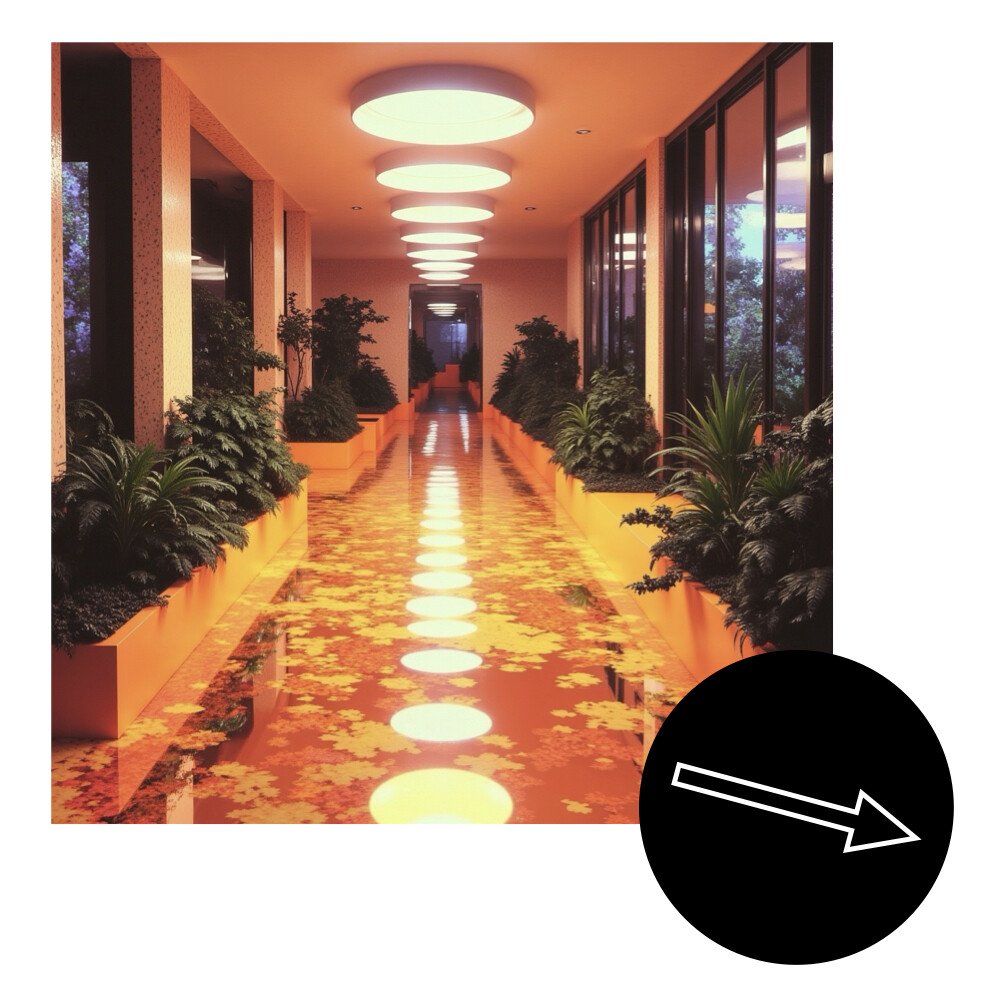
Paths | Image by Brendan Gregory generated via Freepik AI
Edges
Boundaries such as walls, rivers, or shorelines
Boundaries can be quite literal or can be interpreted more loosely - these elements can be either real or perceived. Movable, demountable partitions or long walls of operable glass can help blur the lines between the indoor and outdoor zones. Likewise, flexibility in function can help quickly transform an open, social space into a quiet huddle room for a break out meeting or important call. Whereas traditionally the office was a walled off fortress of functionality surrounded by a moat of inhospitable asphalt, increasingly we're seeing a blurring of the lines between work.place and third place which in turn means a softening of the edges of the work.place.
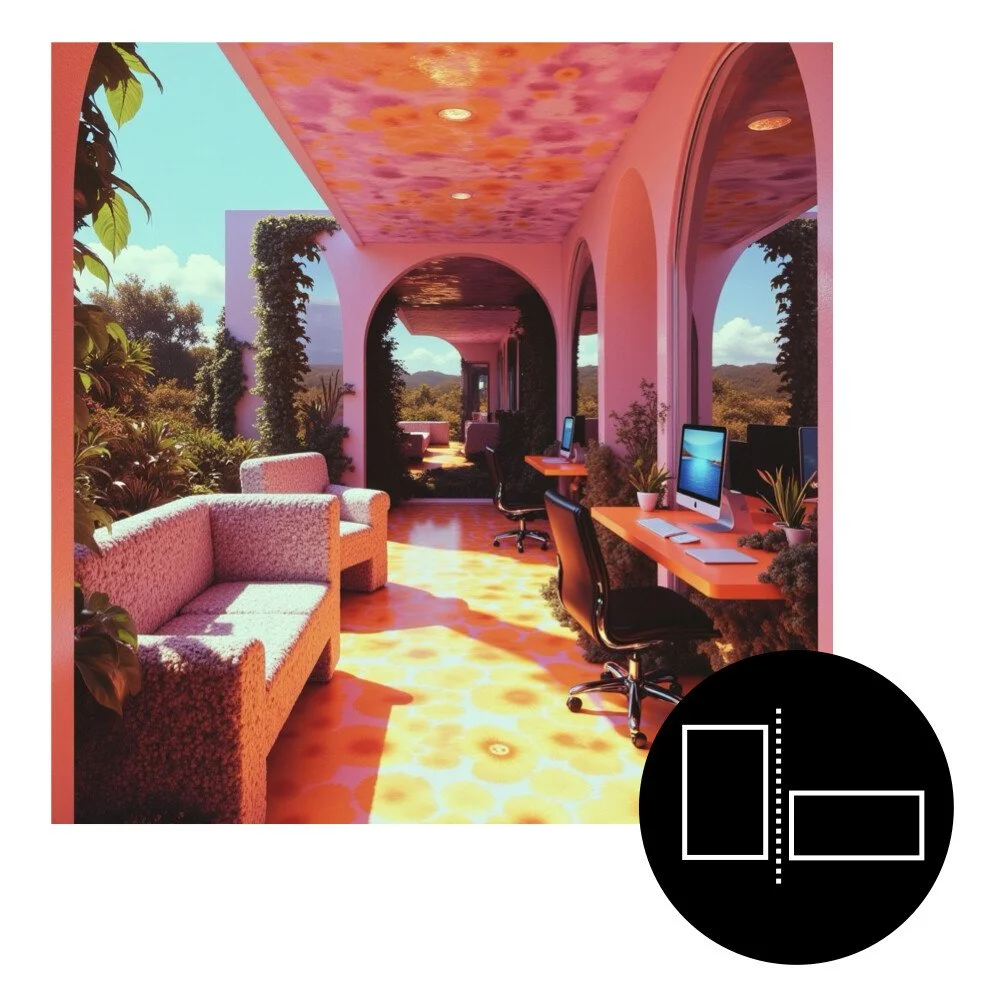
Edges | Image by Brendan Gregory generated via Freepik AI
Districts
Areas with a recognizable character or identity
Sometimes also referred to as "neighborhoods", districts within a building can help provide a sense of place and belonging for the occupants of the space. Specialized team zones, communal gathering spaces like Salesforce Tower's Ohana Floor, or Apple Park's signature fruit orchards serve as the town hall + gathering space not just for the company, but for the whole surrounding community. An individual can enter into and out of these spaces and they often have common identifying characteristics. In a world that's increasingly pulling us into our screens & devices and away from reality, it's about more than just the utility or function of our built spaces; it's about helping to make a place feel more meaningful evoking emotion and connection.
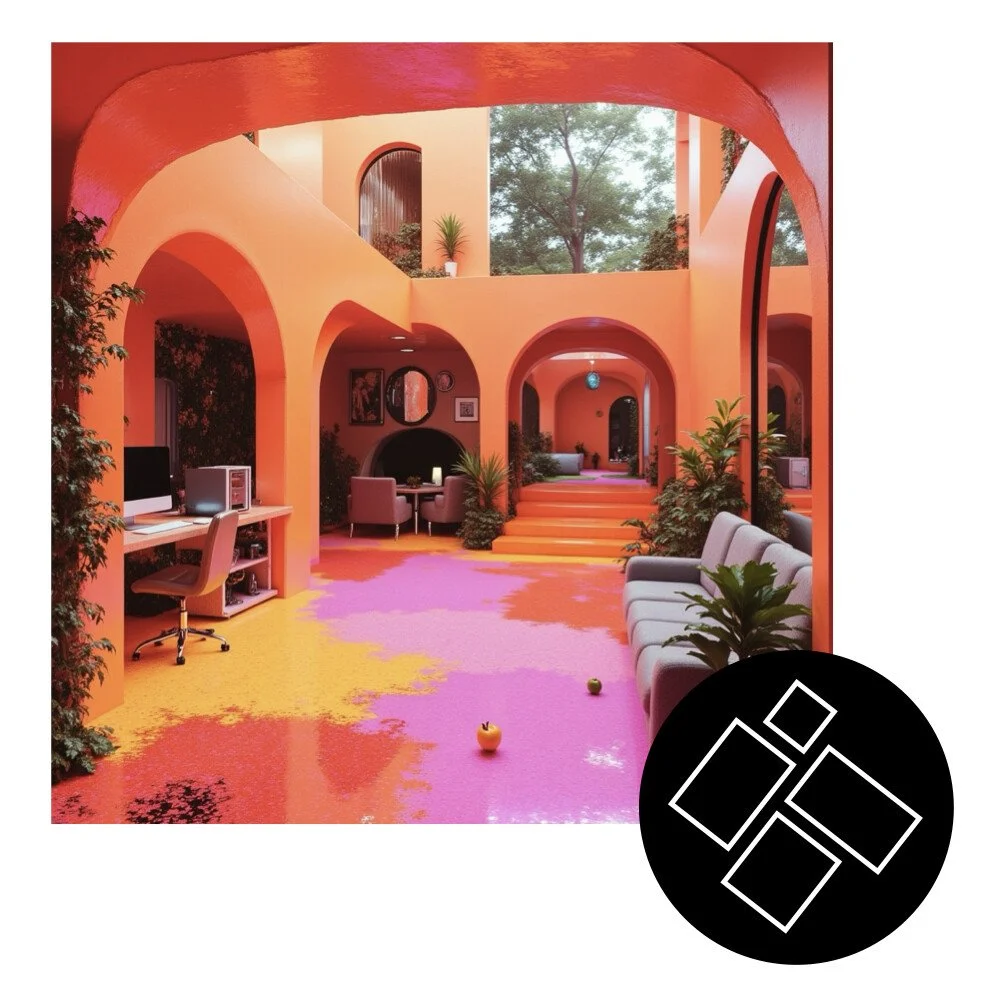
Districts | Image by Brendan Gregory generated via Freepik AI
Nodes
Key intersections or focal points, often where activity concentrates
Nodes can be exciting opportunities to break from established norms. These areas, in the context of city planning, serve as the focal point of the city at the collision of different neighborhoods, paths, or districts. Likewise in work.place design, nodes such as kitchens, community lounges, and shared "hubs", can be major intersections for ideation, innovation, and cross pollination across disparate departments within the same organization. Playful signage, unexpected details, or even a signature design element (meet Industrious' "Rupert" here , here, & here) can help evoke meaningful moments of surprise and delight to help keep people engaged and break up the monotony of the work.place and workday.
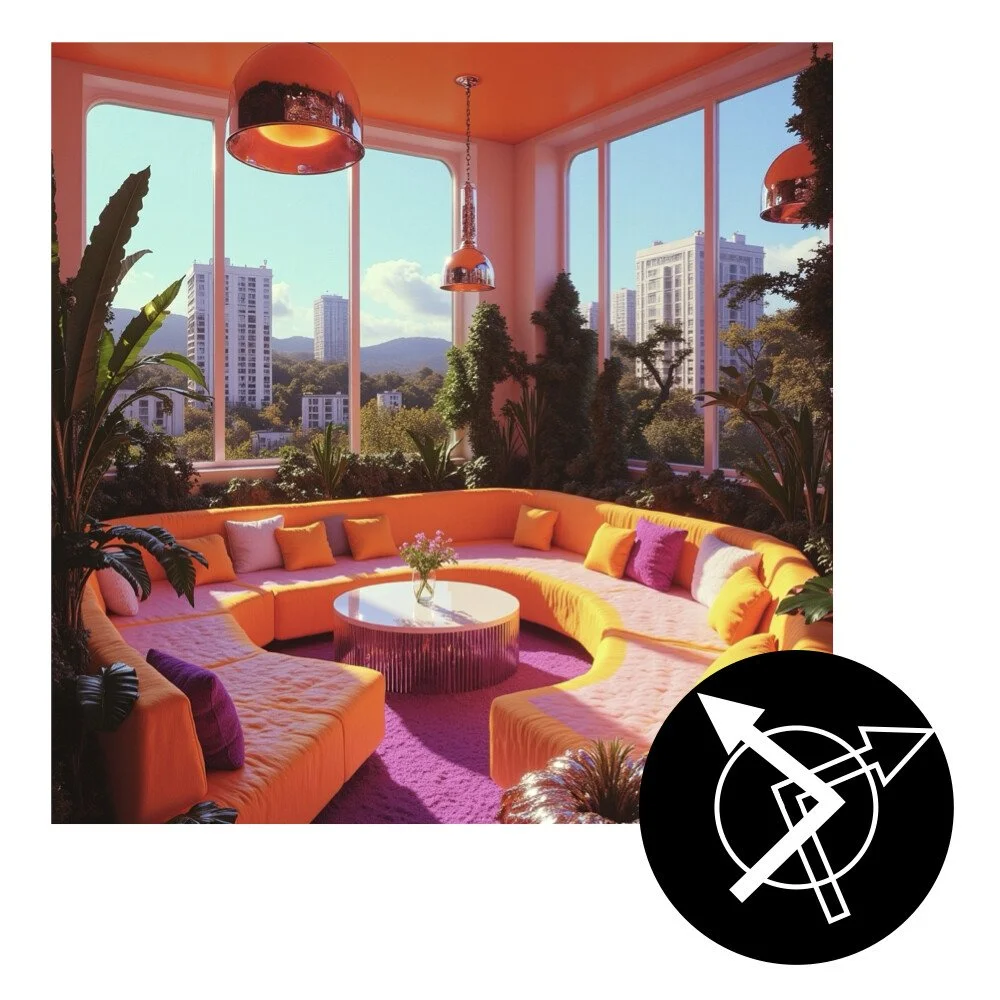
Nodes | Image by Brendan Gregory generated via Freepik AI
Landmarks
Prominent features used for orientation (i.e., towers, statues)
Lastly, landmarks are the standout features that can help to guide + orient visitors. Whether a fountain in the heart of a town square or a distant clocktower looming over a college campus, these features are often unique or memorable in the context within which they exist. In the realm of work.place this could be something as small as a single art piece or bold furniture selection, or as large as a multi-story connecting staircase across several floors. A successful landmark breaks from the ordinary and can always draw the end user back to a common point of reference or origin.
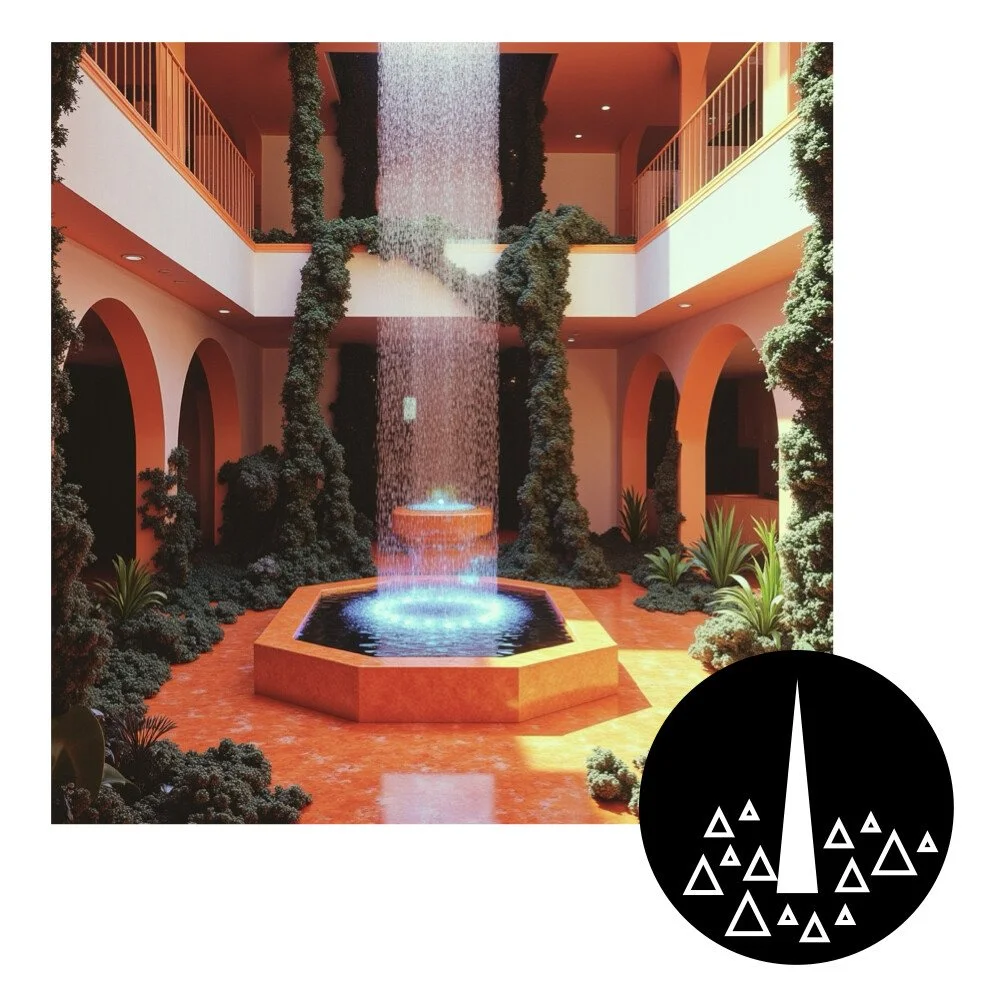
Landmarks | Image by Brendan Gregory generated via Freepik AI
The takeaways:
Design for "Mental Maps" // Do what you can to help people instantly understand the layout of a place. Whether it's a city or an office floor, clarity can help to reduce stress and boost confidence. Materiality & Wayfinding tend to matter more than you think.
Create a Sense of Place // Memorable spaces = emotionally "sticky" spaces. Distinctly designed "districts" and "landmarks" can help to make spaces feel more vibrant and purposeful.
Balance Structure with Surprise // People want to feel grounded but are also always looking discover new things. A clear layout with intentional moments of surprise + delight (views, artwork, breakout spaces) keep people engaged.
In the simplest terms, great urban design makes for great work.place design. This is because our favorite urban places + spaces are more than just pure function or beauty, they're about a gravitational pull, evoking our emotions, and eliciting a connection. A city, much like a great work.place, becomes truly alive when its paths, edges, districts, nodes, and landmarks tell a story people can innately feel and yearn to be a part of.
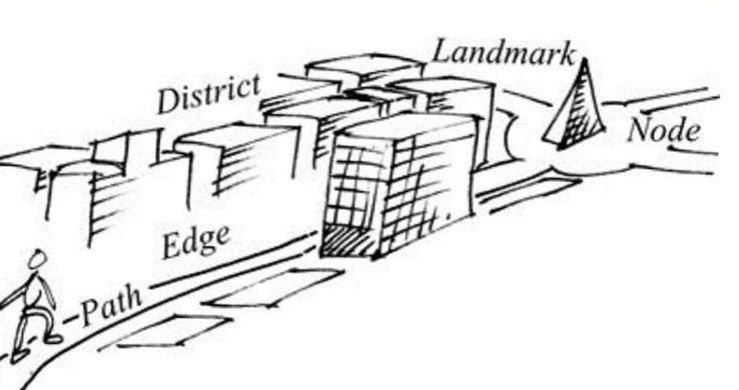
Image by Kevin Lynch | "The Image of the City"
